
Everything You Need to Know About the Best Rolex Watch Models
Updated 2026 · 18 min read
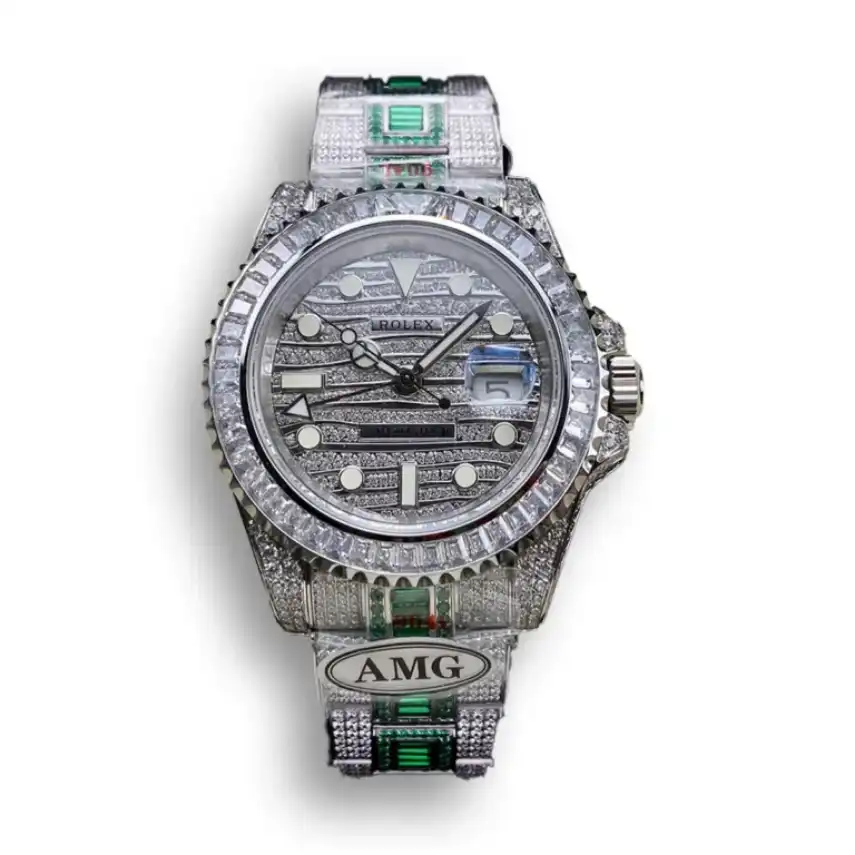
On September 4, 1905, Hans Wilsdorf and his brother-in-law Alfred Davis registered a watch business at 83 Hatton Garden in London. The company had no manufacturing capability. It bought movements from Hermann Aegler in Bienne and cases from local suppliers, assembled the pieces, and sold them under the name "Rolex" — a word Wilsdorf chose because it was pronounceable in every European language and was short enough to fit on a watch dial.
From that modest beginning, over 121 years, Rolex built what is arguably the most recognized watch brand in human history. Not the most respected among connoisseurs (Patek Philippe holds that position), not the most technically innovative (Jaeger-LeCoultre or Breguet), not the most expensive (Richard Mille). But the most recognized, the most desired, and in terms of consistent quality across a broad lineup at meaningful price points — the best.
Understanding the best Rolex models means understanding the distinct character of each family — where it came from, what it was built for, and why it matters in 2026.
The Submariner: The Watch That Made Everything Else Possible
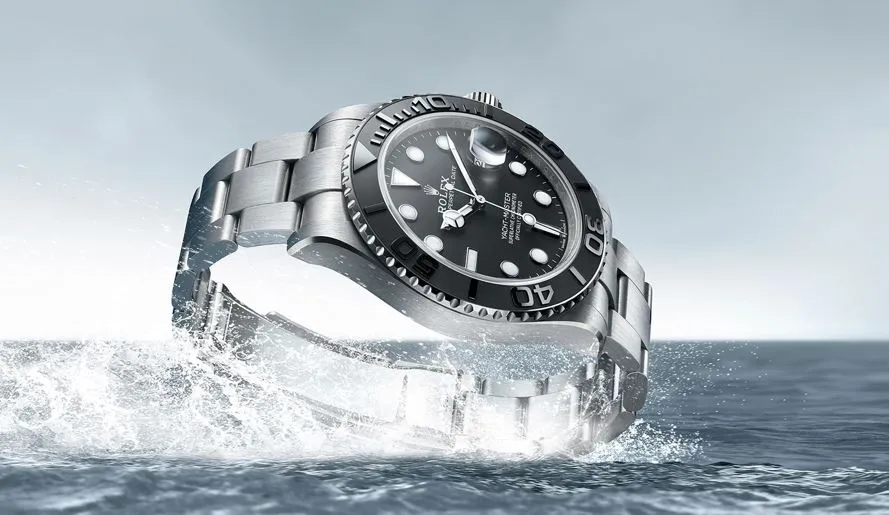
The Submariner launched in 1953 with a 100-meter water resistance rating and a clean, purposeful design that has remained essentially unchanged for seven decades. It was not the world's first dive watch — Blancpain's Fifty Fathoms beat it to market by a few months — but it became the category's defining object. Every dive watch made since is measured against the Submariner.
The current reference 126610LN in 41mm Oystersteel is the most refined expression of the original concept. The calibre 3235 movement powers it; the black Cerachrom ceramic bezel replaces the vulnerable aluminum version; the Oyster bracelet now incorporates the Glidelock extension system for wearing over a wetsuit. It retails for $10,100. It is, within its category, perfect.
The GMT-Master II: The Traveler's Companion
Pan American Airways approached Rolex in the early 1950s with a specific request: a watch for jet-age pilots that could display two time zones simultaneously. The original GMT-Master (reference 6542, 1954) solved this with an additional 24-hour hand that completed one rotation per day instead of two, paired with a 24-hour rotating bezel to track a second time zone.
The most famous GMT design is the "Pepsi" — blue and red bezel, representing day and night in the second time zone — which became an icon of both aviation and pop culture. The current reference 126710BLRO on a Jubilee bracelet is the most beautiful iteration the watch has ever worn. At $10,800, it's also one of the hardest Rolex references to acquire at retail.
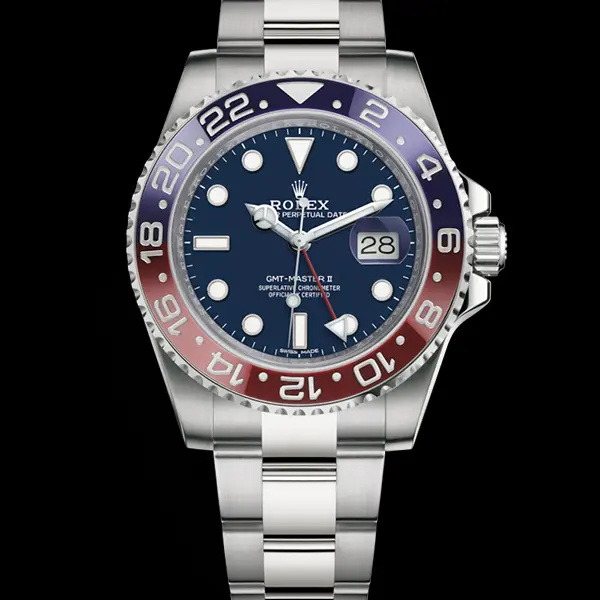
The GMT family has expanded significantly. The Batman (blue and black bezel), the Batgirl (same colors on Jubilee), the Root Beer (brown and black), the Sprite (green and black), and the Absinthe (green and black in yellow gold) all represent distinct aesthetic positions within the family's framework.
The Daytona: From Unloved to Unmissable
The Rolex Cosmograph Daytona has the most unlikely origin story of any iconic watch. Introduced in 1963 and named for the Daytona International Speedway in Florida, it was designed for racing drivers who needed to measure elapsed time and average speeds. For nearly a decade, it sold poorly. Dealers could barely move them. Rolex was reportedly considering discontinuing it in the late 1960s.
Then Paul Newman happened. The actor and racing enthusiast wore a Rolex reference 6239 in an "exotic" dial configuration — contrasting outer ring, Art Deco numerals — and was photographed with it so frequently that the entire dial configuration now bears his name. Demand for the "Paul Newman Daytona" transformed the watch from a slow seller into one of the most sought-after references in Rolex history. Newman's own watch sold for $17.75 million at auction in 2017.
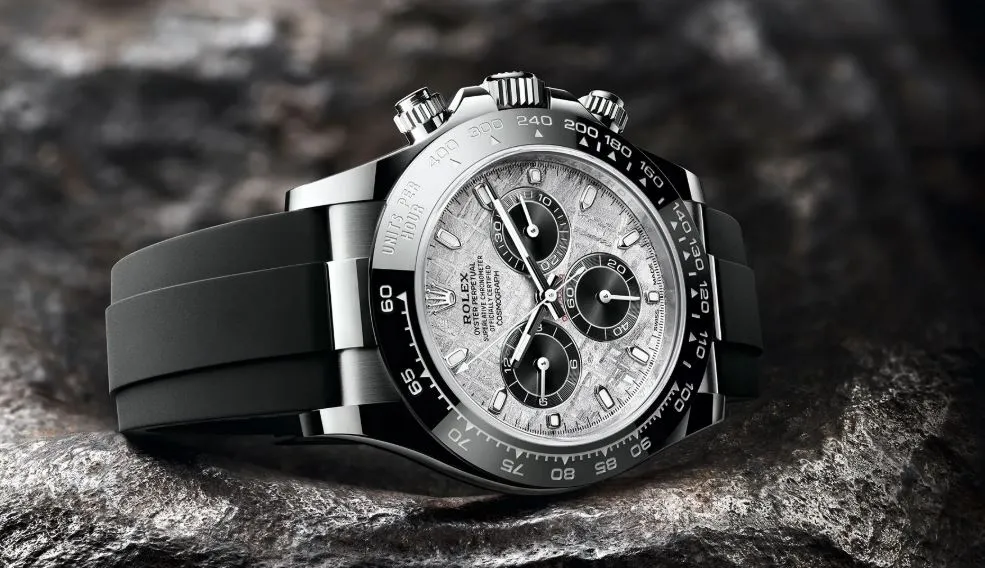
The current Daytona in reference 126500LN (steel, black ceramic bezel) retails for $15,100. The Daytona in precious metals — platinum Platona, gold rainbow — occupies the stratosphere of Rolex pricing. If there's one watch that exemplifies the brand's secondary market premiums, it's the Daytona.
The Datejust: The Watch for Everyone, Every Day
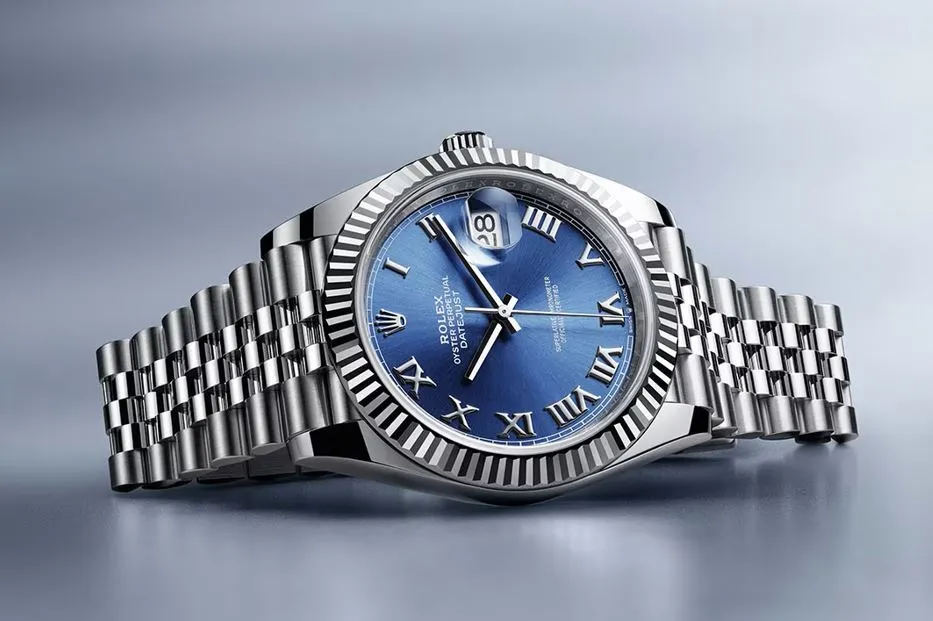
The Datejust was Rolex's 40th anniversary watch in 1945 — the first self-winding watch to display the date in a magnified window. It remains the brand's most versatile model, available in more dial, case, and bracelet configurations than any other Rolex. It's the entry point to the catalog and, for many wearers, the only Rolex they ever need.
The Jubilee bracelet — introduced with the original 1945 Datejust — is one of the most beautiful watch bracelets ever made, and it remains a Datejust exclusive. No other current Rolex standard model ships on Jubilee as the default configuration. This alone gives the Datejust a character that the sports models, for all their appeal, cannot match.
The Day-Date: The President's Watch
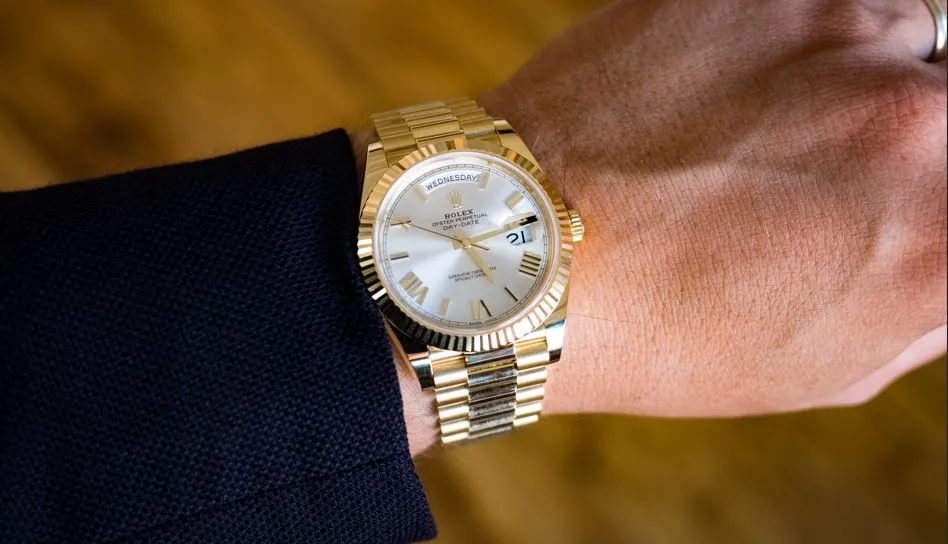
The Day-Date was introduced in 1956 as the world's first watch to display both the day of the week (spelled out in full) and the date. It has been produced exclusively in precious metals since its introduction — no steel, no Rolesor. The message has always been clear: this is for people for whom cost is not a consideration.
American presidents have worn it. Lyndon Johnson reportedly received one as a gift. Martin Luther King Jr. was photographed in a Day-Date. The "Presidential" bracelet — a three-link semi-circular construction unique to the Day-Date — gave the watch its informal name. Starting at $39,650 in yellow gold, the Day-Date remains the ultimate expression of Rolex's capacity for pure luxury watchmaking.
The Explorer: The Mountaineer's Watch
The Explorer's origin story is the most dramatic in Rolex's catalog. On May 29, 1953, Edmund Hillary and Tenzing Norgay stood at the summit of Everest. Hillary was wearing a Rolex Oyster Perpetual. Rolex launched the Explorer reference 6350 the same year, specifically designed for the extremes of altitude, temperature, and physical impact that mountaineering demands.
The Explorer's design is the most austere in Rolex's lineup: no date, no bezel markings, no complications. Just a 36mm (or 40mm in the current 224270) case with Arabic numerals at 3, 6, and 9 — chosen for readability at altitude — and Mercedes hands. It's a watch for people who don't need decoration.
The Sky-Dweller: The Complicated Traveler
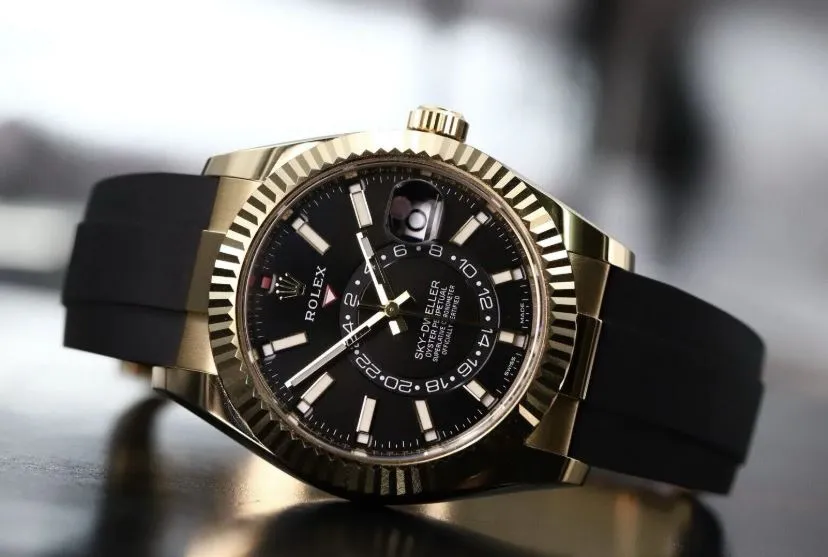
Introduced in 2012, the Sky-Dweller is Rolex's most complicated watch: an annual calendar (adjusting automatically for months of 30 and 31 days, requiring manual correction only on February 28/29), dual time zone display, and a new Saros mechanism that required Rolex to file multiple patents. Set in a 42mm Oyster case with a distinctive ring-command bezel for setting the complications without removing the watch, the Sky-Dweller represents Rolex's most ambitious watchmaking project in decades.
Which Rolex Model Is Right for You?
The honest answer depends on your lifestyle and priorities. The Submariner for versatility and iconic design. The GMT-Master II for travel and a slightly more distinctive aesthetic. The Daytona for sophistication and investment value. The Datejust for daily elegance and adaptability. The Day-Date for a statement of pure success. The Explorer for the person who wants everything removed except what's essential.
Any of these watches — genuine or super clone — represents a relationship with one of the most remarkable design histories in industrial history. Rolex has been making watches that matter since 1905, and the best models from 2026 would have been recognizable to Hans Wilsdorf as the logical evolution of everything he started.
Browse super clone versions of all these models in our replica Rolex catalog, read our buying guide for quality guidance, and explore individual model histories in our blog — including our full history of the Submariner and the best GMT-Master watches of all time.