
How Replica Rolexes Are Affecting the Pre-Owned Market — and Why Rolex Doesn't Care
Updated 2026 · 14 min read
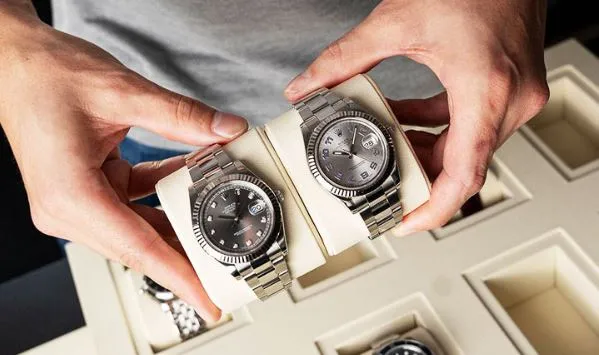
In 2023, Rolex stunned the watch industry by acquiring Bucherer — one of Europe's largest multi-brand watch retailers — for a sum reported to be north of one billion dollars. The move was extraordinary for a company that had spent 120 years maintaining strict independence from distribution. It was even more extraordinary because Bucherer runs one of the world's largest certified pre-owned watch programs.
Rolex, the company that famously produces fewer watches than demand requires, had just bought its way directly into the secondary market. If you had any doubt that Rolex monitors and thinks carefully about what happens to its watches after they leave the factory — that acquisition erased it. The question is: what does this have to do with the millions of replica Rolexes circulating globally, and why does the company that obsesses over every detail of its brand seem remarkably unmoved by their existence?
The Scale of the Pre-Owned Market
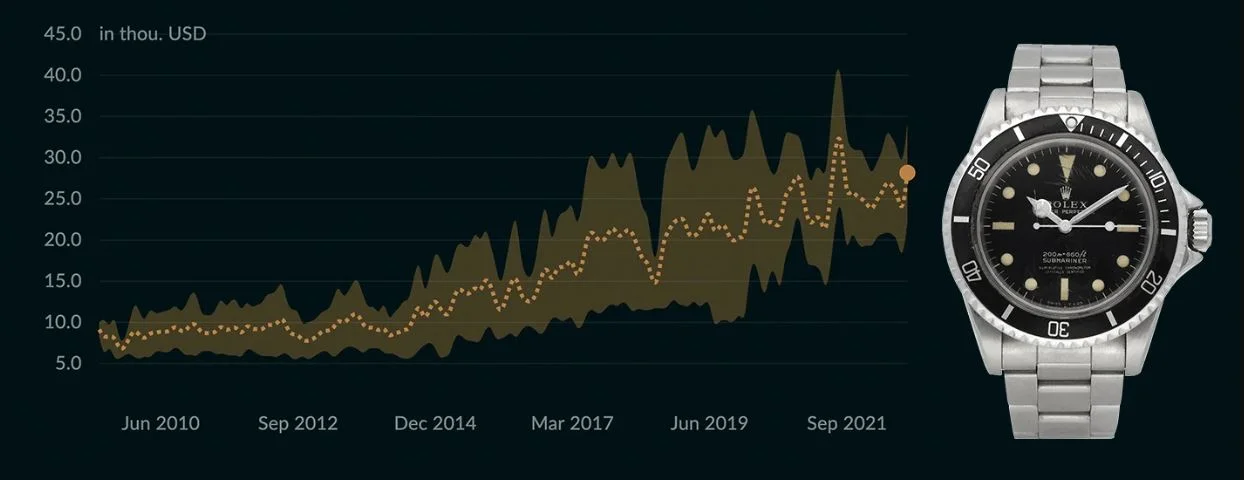
The global pre-owned watch market was valued at approximately $22 billion in 2023, and analysts project it will reach $35 billion by 2028. Rolex dominates this space in a way that has no parallel in luxury goods. A pre-owned Submariner is not a diminished product — it frequently sells for more than it cost new. The Submariner reference 16610, discontinued in 2010, regularly fetches $10,000–$15,000 at auction. The reference 5513 from the 1970s can reach $30,000.
This appreciation dynamic is what makes Rolex unique. Hermès Birkin bags appreciate, and rare Patek Philippe pieces are investments. But no other watch brand has managed to make its entire core sports catalog — from the entry-level Submariner to the mid-range GMT-Master II — reliably appreciate over time at the retail level. The waiting lists at authorized dealers, the allocation system that forces clients to build purchase histories, the deliberate production constraint — all of it feeds the secondary market premium.
Where Replicas Enter the Story
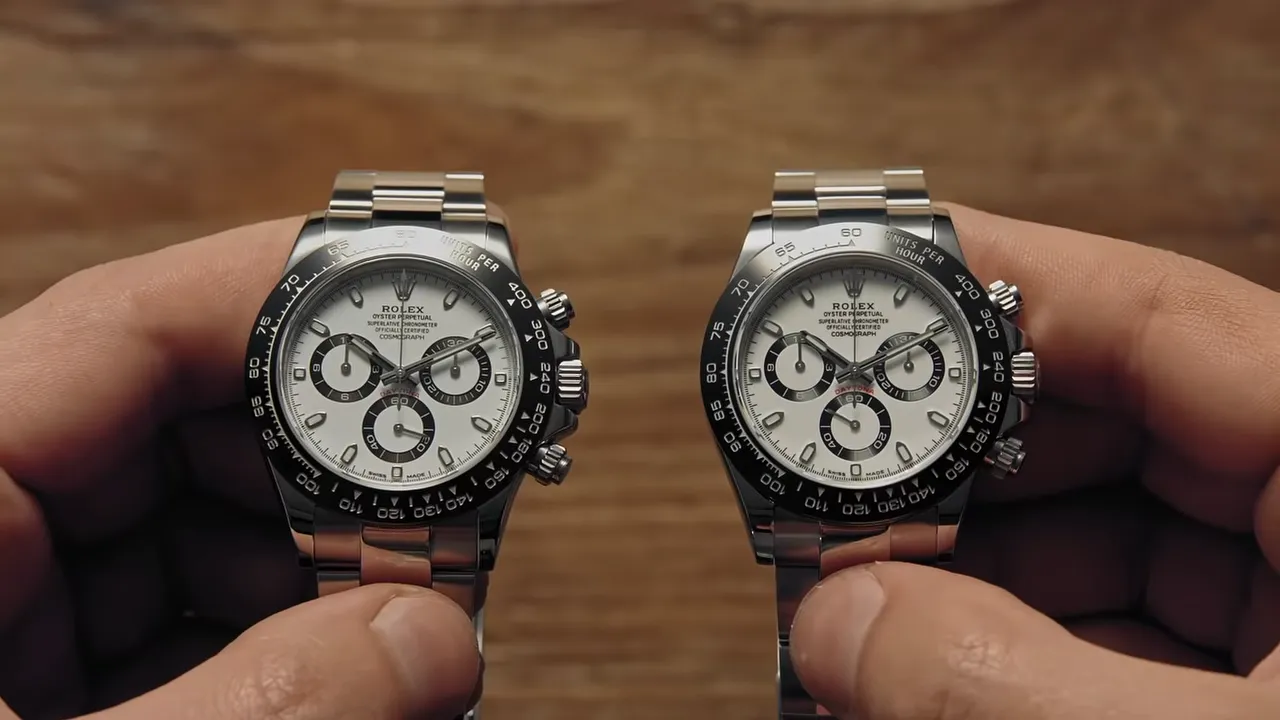
There are, by conservative estimate, tens of millions of replica Rolexes in circulation. The quality spectrum is enormous — from obvious tourist-market fakes that fool no one, to what the industry calls "super clones" that use Swiss or Japanese movements, 904L steel, sapphire crystal, and genuine Rolex-spec dimensions to create a product that requires expert examination to identify.
The effect of this supply on the pre-owned market is more complex than it first appears. Simple intuition suggests replicas would depress pre-owned Rolex prices by offering a substitute. The data says something different. Pre-owned Rolex prices peaked in 2022 at extraordinary premiums — a new-retail Submariner that cost $9,100 was changing hands for $16,000–$18,000 on the gray market. Even after the correction of 2023, when premiums fell back closer to retail, genuine pre-owned Rolex watches remain significantly above their original purchase price.
Replicas have not depressed this market. If anything, scholars of luxury economics argue that high-quality fakes of aspirational goods can increase demand for the genuine article. When someone wears a super clone, they're not hiding their desire for a real Rolex — they're expressing it. They become brand ambassadors and, eventually, a meaningful percentage become buyers.
What Rolex Actually Does About Replicas
Rolex maintains a dedicated anti-counterfeiting division. The company spends millions annually on litigation, custom enforcement cooperation, and market monitoring. Large replica operations have been shut down — Chinese authorities, working partly at Rolex's request, have conducted raids on factories producing counterfeit watches. There is a real enforcement apparatus.
And yet. Replicas persist. The high-quality end of the market — the super clones produced in small quantities for discerning buyers — barely registers in Rolex's public enforcement actions. The company focuses most of its energy on mass-market counterfeits sold openly as Rolex watches to unsuspecting buyers, which is a genuine consumer protection issue. The sophisticated replica market, where buyers knowingly purchase a quality homage, occupies a different ethical and legal category — and Rolex, strategically, doesn't spend enormous resources fighting the customer who admires their brand enough to wear its aesthetic.
The Bucherer Play: Why Rolex Went Direct
The Bucherer acquisition made strategic sense the moment you understand what Rolex fears most — and it isn't replicas. It's inauthenticity in the secondary market. The Frankenwatch problem (genuine watches assembled from mixed genuine and aftermarket parts, presented as original) is the real threat to Rolex's secondary market dominance. A pre-owned Submariner with a replaced dial or a non-Rolex crown is worth a fraction of an all-original example.
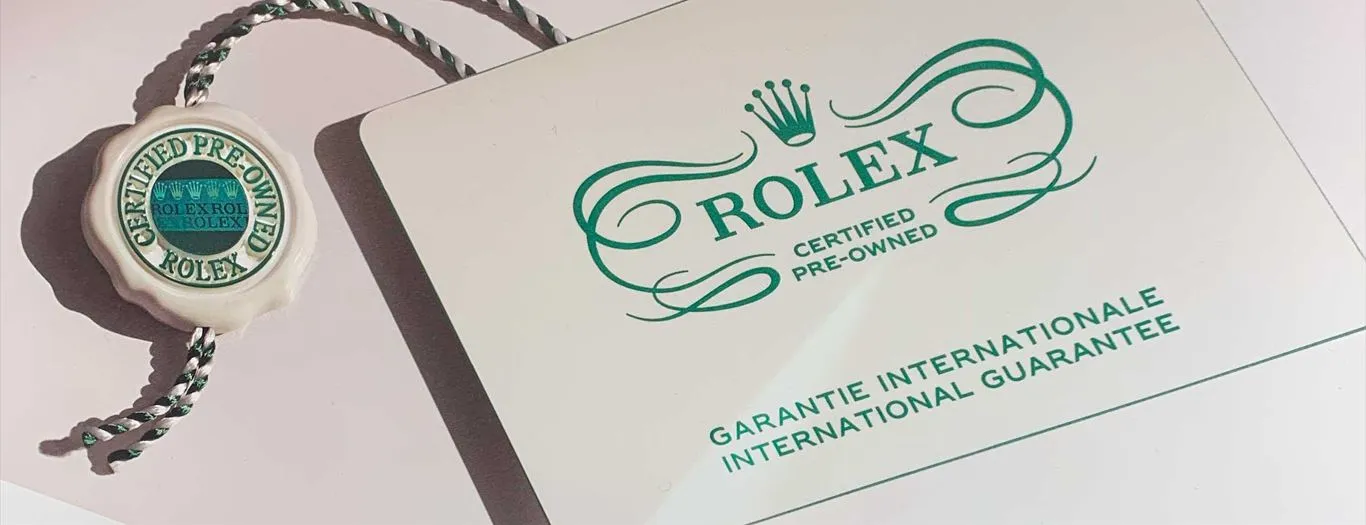
By owning Bucherer and its certified pre-owned program, Rolex gains direct control over the authentication and sale of used Rolexes. Every Bucherer pre-owned Rolex carries a certification backed by the manufacturer. This doesn't eliminate the gray market, but it gives Rolex an authoritative answer to the question every buyer asks: "Is this real, and is it original?"
The Super Clone Buyer: Who Are They?
Market research on replica buyers is limited — for obvious reasons, people don't readily admit to purchasing them in surveys. But anecdotal evidence and industry analysis sketch a consistent profile. The typical super clone buyer is not someone who would otherwise spend $10,000 on a genuine Submariner. They are someone who genuinely appreciates the design, the history, and the aesthetic of Rolex watches but cannot or will not pay the retail premium for a product they may not be able to actually obtain at an authorized dealer anyway.
This is a crucial distinction. The person buying a super clone Submariner for $400 is not "stealing" a $10,000 sale from Rolex. They were never a $10,000 buyer. Rolex understands this. The genuine threat — the buyer who would have paid retail but chose a replica instead — is vanishingly rare at the premium super clone price point.
The Market in 2026
Pre-owned Rolex prices have stabilized in 2026 after the turbulent 2021–2023 cycle of extreme premiums followed by correction. A steel Submariner now trades at roughly 10–20% above retail on the secondary market — elevated, but manageable. The gray market premiums for scarce references (new Land-Dweller, Daytona Paul Newman tribute) remain extreme in the months following announcement.
The replica market has, if anything, grown more sophisticated. The gap between a super clone and a genuine Rolex has narrowed to the point where authentication requires movement inspection or Rolex's own laser-engraved micro-text verification. Caseback engravings, dial printing, bezel ceramics — all have been replicated at a quality level that would have been impossible a decade ago.
For buyers navigating this landscape, knowledge is the primary tool. Our guide to fake Rolexes covers what to look for when purchasing any Rolex — new, pre-owned, or replica. If you're interested in exploring super clone options directly, our buying guide explains what separates a quality super clone from the counterfeits that give the replica market a bad name.
Rolex doesn't care about replicas in the way its lawyers might suggest. What it cares about — deeply, structurally — is the integrity of the genuine article. And that integrity, backed by 121 years of manufacturing history, a private trust structure that reinvests all profits, and a brand identity stronger than any single watch family, is fundamentally unthreatened by any super clone. That's the quiet confidence behind the brand's seemingly indifferent posture. They've already won the brand war. Replicas are, in a strange way, the proof.
Explore our collection of super clone Rolex watches — built to the highest specifications available in the replica market, for enthusiasts who understand exactly what they're buying.