
How to Spot a Rolex Submariner Copy — and What It Tells You About the Real Thing
Updated for 2026 · 13 min read
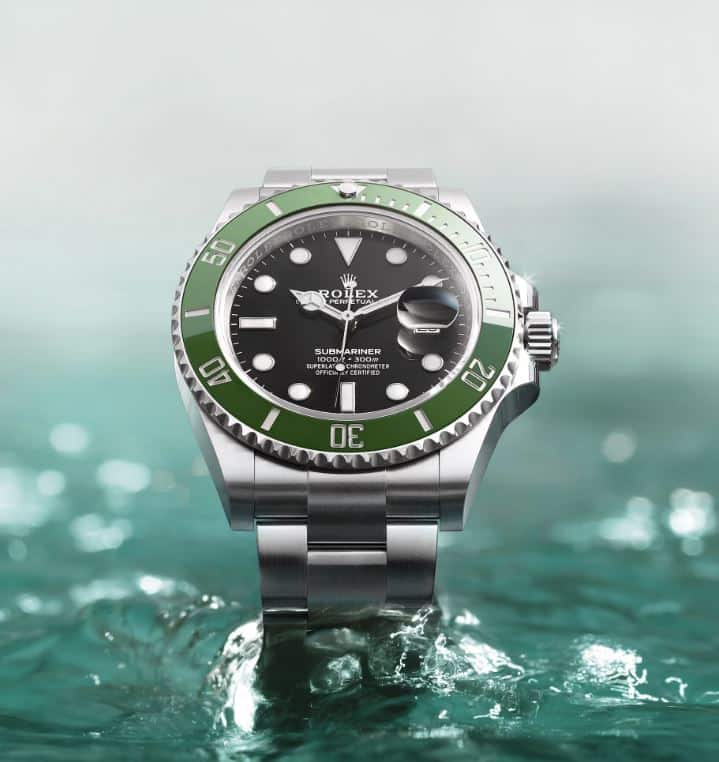
The year was 1983. A Swiss watchmaker named Jean-Claude Biver had just rescued Blancpain from near-extinction and was about to do the same for the Swatch Group. But on the streets of Hong Kong, something else was happening: the first wave of mass-produced Rolex fakes was flooding Asian markets, and the trade was so brisk that Swiss customs officials were seizing suitcases full of counterfeits at the airport every week.
Those early fakes were terrible. Tin cases. Plastic crystals. Movements that stopped working after a week. Any watchmaker — or frankly, any person who had ever held a real Rolex — could spot them in seconds.
But forty years is a long time. And in 2026, the gap between a cheap fake and a high-quality Rolex replica has become… complicated. Understanding what to look for — and why — turns out to be one of the most fascinating exercises in watch appreciation you can undertake.
The Dial: Where Cheap Copies Always Fail First
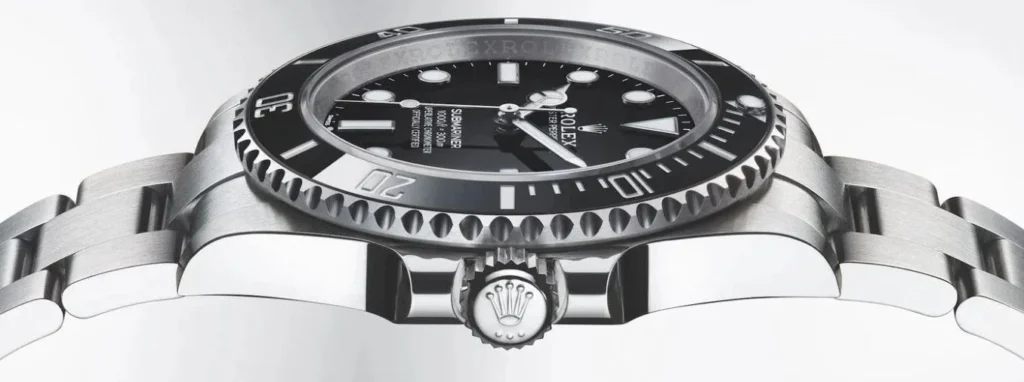
A genuine Rolex Submariner dial is a small miracle of precision printing and applied metalwork. The text — "SUBMARINER", "ROLEX", the depth rating — is printed using a process called pad printing, applied in layers so thin they're measured in microns. The edges are razor-sharp. The luminescent material in the hour markers isn't painted on top of the markers; it's set into recessed wells in the applied gold indices, flush with the surface.
On a cheap fake, the text bleeds. Under a loupe, the letters have fuzzy edges. The lume sits proud of the dial surface, often uneven, sometimes with small bubbles. The "Swiss Made" inscription at 6 o'clock — which on a genuine Submariner is microscopically precise — looks smudged or slightly offset.
Here's the historical footnote that makes this particularly interesting: early Submariners from the 1950s used a process called gilt printing — gold ink on a lacquered black dial. By the mid-1960s, Rolex switched to tritium-infused paint for the indices. By the 1990s, they moved to the luminova compounds we see today. Each era has its own specific dial characteristics, which is why serious collectors can date a Submariner to within a few years just by examining the dial under magnification.
The Crystal: Sapphire vs. Mineral Glass
Hold a genuine Submariner at an angle to a light source and you'll see something remarkable: almost no reflection. Rolex applies an anti-reflective coating to the underside of the sapphire crystal, tuned to reduce glare in precisely the wavelengths most visible to human eyes. The crystal reads as nearly invisible — you look through it, not at it.
Cheap copies use mineral glass or low-grade synthetic sapphire. Mineral glass scratches if you look at it wrong. Low-grade sapphire is harder but lacks the anti-reflective coating, giving the watch a hazy, glassy appearance that telegraphs "replica" to anyone paying attention. You can often see your own reflection clearly in a fake Submariner crystal — on a genuine, the glass is practically invisible.
The cyclops lens over the date window is another reliable tell. On a genuine Submariner, the cyclops magnifies the date exactly 2.5x, and the date sits perfectly centered in that magnification bubble. On a poor replica, the magnification is wrong, the date sits off- center, or the bubble itself has a slightly wrong profile.
The Bracelet: Rolex's Most Underappreciated Engineering
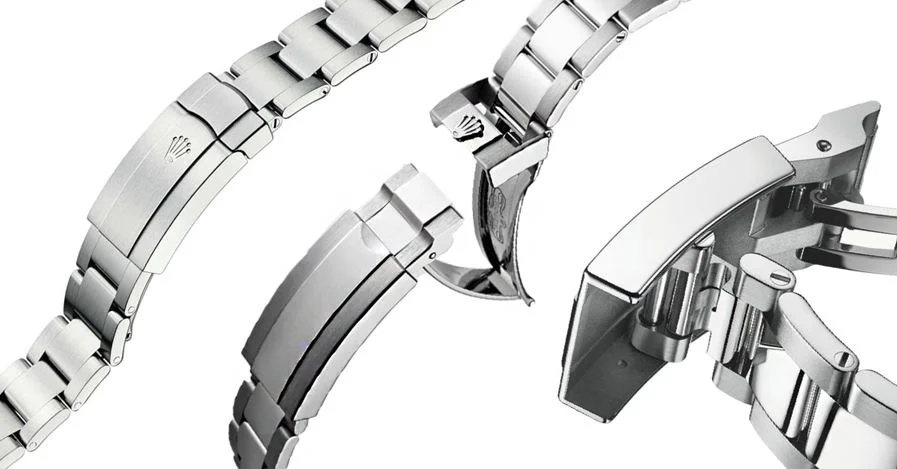
The Rolex Oyster bracelet is built from three-piece links machined from solid 904L stainless steel. Flex it between your fingers and you feel an even, smooth resistance — like a chain that knows its own strength. The clasp engages with a precise, satisfying click. The Easylink extension allows the bracelet to be lengthened by 5mm with a simple thumb pressure — a feature designed for divers wearing wetsuits who need to quickly adjust fit.
Cheap bracelet replicas use hollow links — you can hear the difference if you tap the bracelet against a table. The links rattle. They flex unevenly. The clasp has play in it, wobbling slightly when engaged. On a genuine Rolex bracelet, there is zero perceptible play anywhere.
The brushed and polished finishing on a genuine Rolex bracelet is another masterclass. Rolex polishes specific surfaces of the bracelet — the outer face of the center links — while leaving the flanking links brushed. The line between polished and brushed is surgical, with no bleeding or overlap. Replicating this requires the same high-end polishing equipment Rolex uses in Geneva. Cheap fakes fudge it; the result looks wrong in a way that's hard to articulate but impossible to unsee once you know what to look for.
The Caseback: The Invisible Tell
A genuine Rolex Submariner has a completely smooth, solid caseback. No engravings. No exhibition window. Just a polished disc of steel with the Rolex coronet embossed in the center and the model information laser-engraved around the perimeter in characters so small you need magnification to read them.
Cheap fakes almost always have an exhibition caseback — a see-through window showing the movement. This is because the fake movement looks superficially impressive to laypeople, so sellers use it as a selling point. A genuine Rolex buyer would never expect to see through the caseback; Rolex hasn't made a Submariner with an exhibition caseback in their entire production history. The presence of a see-through back is an immediate and definitive indicator of a fake.
The Weight and Feel: The Hardest Thing to Fake
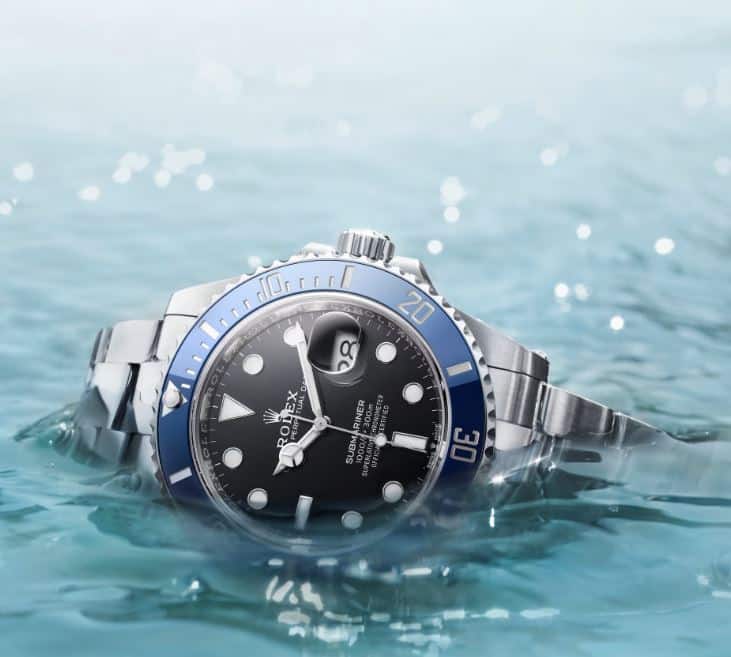
A genuine Rolex Submariner on bracelet weighs approximately 155 grams. Cheap fakes can be 30-40 grams lighter because they use hollow links and thinner cases. The difference is immediately apparent when you put the watch on your wrist — the genuine watch has a presence, a gravitas, that a hollow fake simply cannot replicate.
High-quality superclones come much closer to this weight, because they use the same solid-link construction. This is one of the reasons why the gap between a cheap fake and a premium superclone is so dramatic — it's not just visual. It's tactile. It's physical. You feel it every time you raise your wrist.
So: Should You Buy a High-Quality Replica?
Understanding what separates a genuine Submariner from a copy is ultimately an exercise in appreciating how extraordinary the genuine article is. Every "flaw" in a cheap fake points back to something Rolex does with exceptional precision — the printing, the crystal, the bracelet, the weight, the caseback.
At the top of the replica market, however, the picture changes substantially. The finest superclone Submariners use 904L steel, genuine ceramic bezels, proper sapphire crystals with anti-reflective coating, and solid-link bracelets. The dial printing is done on dedicated equipment. The movement beats at the correct frequency. The result isn't a Rolex — it's not pretending to be a Rolex — but it delivers a remarkable amount of the genuine experience at a fraction of the price.
Read our complete buying guide to understand exactly what to look for when choosing a superclone, and why the quality difference between manufacturers is enormous. Not all replicas are created equal — and knowing how to spot the good ones is, as it turns out, exactly the same skill as knowing how to spot the bad ones.
Also explore our deep dive into superclone technology to understand how the best manufacturers have closed the gap with the genuine article.