
The London Rolex Gang Who Got Caught Taking Selfies in Their Own Loot
Published April 2026 · 12 min read
It is a few minutes before two o'clock on a wet Tuesday afternoon in Chelsea, December 21, 2021, and a man is walking down a quiet residential street with a £1,500 TAG Heuer on his wrist. He has no reason, on this particular afternoon, to think about that watch at all.
Two figures step out from behind a parked car. One is holding a crowbar. The other is holding what the Metropolitan Police will later describe in court documents as a large knife. Neither of them is older than nineteen.
The next thirty seconds will end with the watch gone, the man on the ground, and the two teenagers walking calmly back toward the next street. Somewhere in west London a getaway car is waiting. Somewhere in a flat above a takeaway in Battersea, three other young men are getting ready to do the same thing again before sunset.
It is the first robbery of four they will commit before the day is over.
It is also the beginning of the end of their freedom — though they have absolutely no idea yet, and the reason they will be caught has not been invented in the history of policing. It does not require a forensic lab, a wiretap, or an informant. It requires only a smartphone, a front-facing camera, and a teenager who cannot stop himself from posing.
This is the story of the London Rolex Rippers, and how a six-man gang who terrorised the wealthiest postcodes in Britain were undone by the same instinct that ruins almost every modern criminal enterprise eventually.
They needed people to see what they had done.
A Crime Wave Nobody Saw Coming
To understand how six teenagers and a 29-year-old getaway driver from Balham became the most-photographed armed robbers in London, you have to understand what was happening to watch crime in the years before they got started.
Between 2015 and 2022, the number of watches reported stolen in England and Wales nearly doubled, climbing to 11,035. Six thousand of those thefts happened in London alone — a 56 per cent rise in seven years. By the end of 2023, the total value of stolen watches in the United Kingdom had passed one billion pounds for the first time in history.
The reason was not complicated. A Rolex Daytona that left the showroom in 2017 for around £10,000 could now be sold on the secondary market for £30,000, sometimes more. A GMT-Master Pepsi traded at twice its retail price the moment it left the box. The watches were appreciating faster than property in Mayfair, and unlike property they could be ripped from a wrist in under ten seconds and disappeared into a duffel bag.
Drug dealers did the math. So did teenagers in council estates who had never sold drugs in their lives. One veteran London robbery detective, quoted in the British press, put it bluntly: stolen watches are now safer and more lucrative to sell than cocaine. There is no chemical signature to test. There is no addict who will eventually inform on you. There is only a small, dense, expensive object that fits in a pocket and can be moved across borders in a single afternoon.
By late 2021, the press had a name for what was happening. The Rolex Rippers. It was not a single gang. It was an entire economy.
And on a December morning that year, six young men from south west London decided to enter it.
December 21, 2021
The first robbery happens in Chelsea. Kaijuan Henry, nineteen, from Dagenham, and Roshan Clark, eighteen, from the Winstanley Estate in Battersea, approach a man walking alone in broad daylight. Henry is carrying a knife. Clark has a crowbar. The victim, who has done nothing to attract attention except wear a watch, is forced to hand over a TAG Heuer worth around £1,500.
It takes less than a minute. The two of them turn and walk back toward the car where Michael Malik Ahmed, twenty-nine, is waiting in the driver's seat. The car is stolen. The plates are fake. The afternoon is just beginning.
The second robbery happens in Balham, on a quieter residential street that connects two main shopping roads. The victim is alone. Henry and Clark approach again. This time the weapon is what police will later describe in court as a large zombie knife — one of the long, serrated, machete-style blades that became common on London streets in the late 2010s and that the British government would eventually try to ban under the Offensive Weapons Act. The victim is punched in the face. His bag is taken. He is left bleeding on the pavement.
The third and fourth robberies that day follow a similar pattern. Different victims. Same neighbourhoods. Same gang. Same getaway car. By the time the December sun sets at four in the afternoon, four people in central London have been robbed at knifepoint and the Metropolitan Police have a problem they have not yet realised is connected.
Back at a flat somewhere in south west London, the gang counts the loot. They have four watches and a bag. Several thousand pounds worth of stolen goods, none of which can be sold openly, all of which can be moved through the kind of informal network that exists in every major European city for objects of this type.
And then somebody pulls out a phone.

January 9, 2022
It takes them less than three weeks to do it again, and when they do, the violence escalates significantly.
The location is Chelsea again. The victims are a couple — a man and a woman, walking together on a Sunday afternoon. This time the gang is Jessy Ouma, eighteen, of Wandsworth, with Zakariah Yusuf and Joseph Opoku, both nineteen, both from Clapham.
The weapon is no longer a knife. It is a machete.
What happens next is recorded in the court records that would later be filed at Isleworth Crown Court. The gang brandishes the machete at the couple. They take the woman's Rolex — a piece worth around £6,000. They take her Bulgari ring. They turn to the man and they punch him hard enough in the face to cause multiple fractures. They take his TAG Heuer too.
It takes maybe ninety seconds. Maybe less.
The same gang carries out a second robbery in the same area on the same day. By the time they get back to whatever flat they are using as a base, they have added more pieces to a haul that prosecutors would eventually value, across all of the gang's offences, at around £35,000.
That is when the photos start.
The Selfie
Here is what the police will eventually find.
Sometime in the days after the January 9 robbery, two members of the gang — Kaijuan Henry and Roshan Clark — pose for photographs. The watches are on their wrists. They are smiling. The pieces are not theirs and have never been theirs. They were taken at knifepoint, in some cases by punching their owners in the face hard enough to break bone, from people who had done nothing in their lives except wear an expensive object in public.
Henry and Clark know all of this. They take the photos anyway.
It is impossible, at this distance, to fully understand what they thought they were doing. Maybe they believed the photos would never leave their phones. Maybe they thought the photos were the entire point — that the robbery was incomplete without proof that they had pulled it off. Maybe they were nineteen and eighteen years old respectively and they had just acquired more valuable objects than anyone in their families had ever owned, and the human instinct to photograph the moment was simply stronger than the criminal instinct to leave no evidence.
Whatever the reason, the photos exist. And several weeks later, when Jessy Ouma is arrested by the Metropolitan Police on a separate matter and his phone is taken into evidence, those same photos are on it. Henry. Clark. Smiling. Wearing the watches they had robbed at knifepoint in Chelsea.
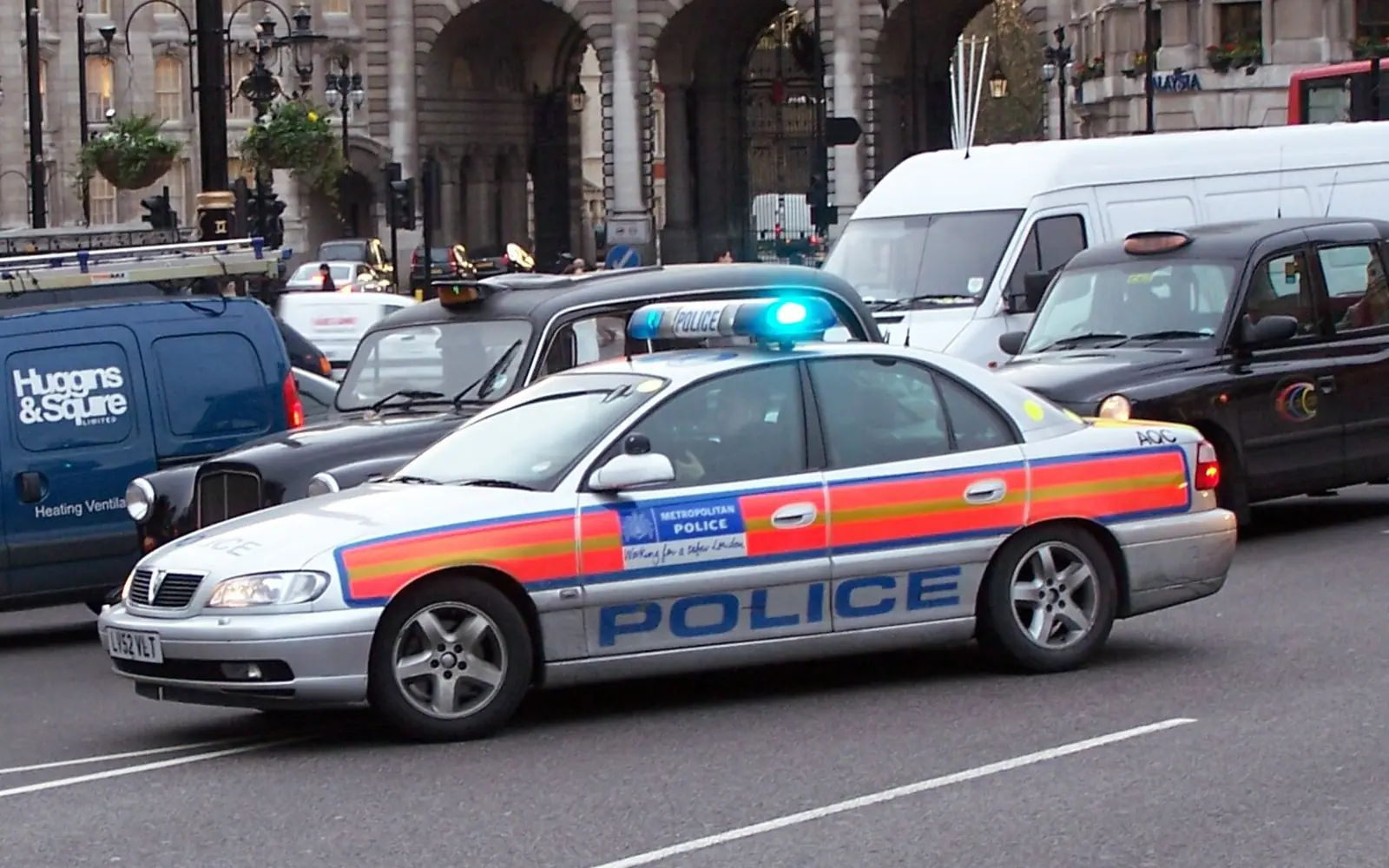
The Flying Squad — the elite branch of the Metropolitan Police that has, since 1919, handled the city's most serious armed robberies — has just been handed the entire case.
What Else They Left Behind
The selfies are the headline mistake. They are not the only mistake.
After one of the robberies, a Met Police pursuit forces Michael Malik Ahmed to abandon the stolen getaway car. He runs. He gets away that night. But when officers search the car, they find his house keys, his mobile phone, and his bank card sitting in the centre console. He has, in the panic of the chase, walked away from his entire identity.
At another scene, officers recover a jacket and a phone. The jacket belongs to Zakariah Yusuf. The phone, when forensically examined, places him at the locations of the robberies.
Cell site data — the records that show which mobile phone tower a particular handset was connected to at a particular time — places all six members of the gang at every robbery scene on every relevant date. The phones do not need to be answered. They do not need to make calls. They simply need to be turned on, and the network records the rest.
By the time the Flying Squad has finished compiling the evidence, the case is overwhelming. Photos of the gang wearing the stolen watches. Phones at every scene. A getaway car with the ringleader's bank card in it. Six suspects, all linked to each other, all linked to every robbery, all linked to the loot.
The arrests are made one after another over the following weeks. There are no dramatic raids. There is no shootout. There is just the slow, inevitable, almost boring conclusion of an investigation that the criminals themselves had effectively prosecuted for the police.
The Sentencing
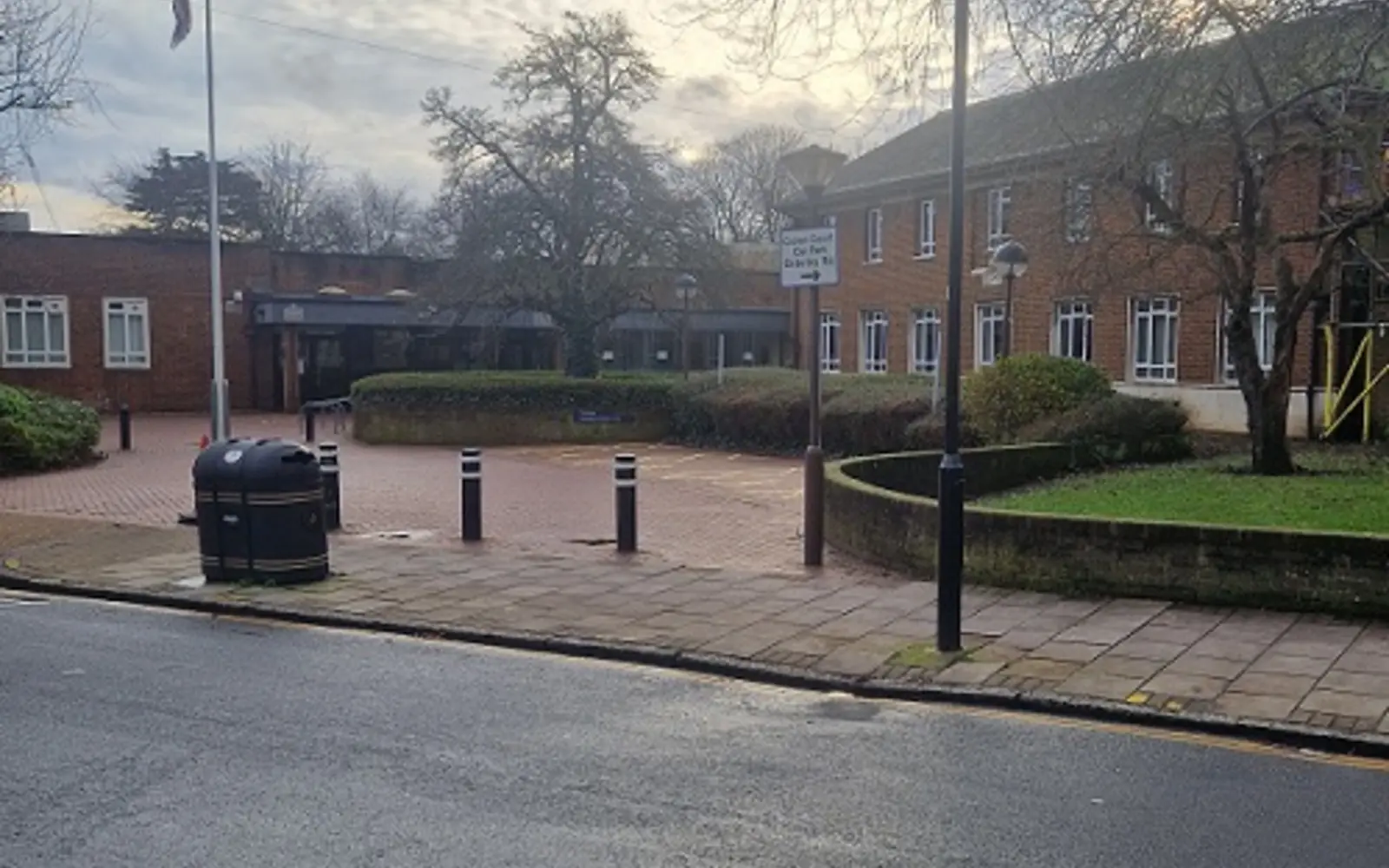
The trials are held at Isleworth Crown Court in west London — the same court that handles many of the high-profile London robbery cases because of its proximity to the Flying Squad's operational area. Five of the six gang members plead guilty before the trial. One is found guilty by a jury.
The sentences, when they come down, are handed out individually:
- Michael Malik Ahmed, twenty-nine, the getaway driver and ringleader: six years and nine months, the longest sentence in the case
- Kaijuan Henry, nineteen, of Dagenham: six years
- Jessy Ouma, eighteen, of Wandsworth: four years
- Zakariah Yusuf, nineteen, of Clapham: two years and six months
- Joseph Opoku and Roshan Clark, both eighteen at the time of the offences, receive sentences contributing to a gang total of more than twenty-four years in prison
Twenty-four years for a few weeks of work. About five thousand pounds of stolen goods per year served, on average, across the entire group. By any rational accounting it is one of the worst trades a person could make with their own life.
The judge, in sentencing, references the violence — the fractured face of the man in Chelsea, the terror of the woman whose ring was torn from her finger, the use of a machete on a residential street on a Sunday afternoon. He references the photographs. He notes that the gang members had not only committed the robberies but had taken evident pride in committing them.
By the time the last sentence is handed down, the Met's broader operation against the Rolex Rippers crime wave has produced 31 arrests, 27 charges, and 21 convictions across nine months. The Chelsea-Balham gang is one of the more spectacular cases. It is far from the only one.
Why They Got Caught
There is a temptation, in stories like this, to make the moral about violence. About the cruelty of attacking strangers in the street. About the wreckage left behind in the lives of the people who were beaten and robbed and who will not look at a watch the same way again for the rest of their lives. All of that is true and all of that matters.
But the operational lesson — the part of the story that policing professionals study and that every modern criminal in every modern country eventually has to confront — is something narrower and stranger.
They got caught because they could not resist showing what they had done.
This is the central problem of crime in the smartphone era. The thing that used to be the criminal's greatest protection — silence, anonymity, the absence of any record — has become almost impossible to maintain in a culture where every moment of every life is photographed, tagged, geolocated, and uploaded by reflex. The robbers of the 1970s could disappear into a city with a sack of money. The robbers of 2021 could not stop themselves from taking a selfie before they had even finished counting the haul.
A retired Flying Squad detective, quoted in the British press, made the point more directly: in twenty years of investigating armed robbery, the single biggest change he had seen was not in the criminals' weapons or methods. It was in how often they did the work for him. They photograph everything, he said. They cannot help it. We just have to find the phone.
This is the world the Rolex Rippers were operating in, and they did not understand it. They were technically sophisticated enough to use stolen plates, fake car registrations, and burner SIMs. They were not sophisticated enough — or perhaps not disciplined enough — to put down the phone.
The gap between those two kinds of sophistication is the gap that modern policing has learned to fish in. It is wider every year.
What Remains
The watches the Chelsea couple lost on January 9, 2022 — the £6,000 Rolex, the Bulgari ring, the TAG Heuer — were never recovered intact. Some of the loot from the wider Rolex Rippers crime wave has been traced to international networks running watches from London out to mainland Europe and from there to North Africa and the Middle East. Other pieces have simply vanished into the kind of grey market that exists for any high-value object that can be moved without paperwork.
The victims, in most cases, have been compensated by insurance. The physical injuries — the fractured cheekbone of the man in Chelsea, in particular — have healed. The psychological injuries are harder to measure and are not the kind of thing the courts assess.
The gang is still in prison as of early 2026. Ahmed will not be released until late 2027 at the earliest. Henry and Ouma will follow shortly after. By the time any of them walks out of an English prison, the youngest members of the gang will be approaching twenty-five — old enough, perhaps, to look at the photographs that put them inside and finally understand what they cost.
Or perhaps not. People often do not learn the lesson their own evidence is trying to teach them.
The London Rolex Rippers is, in the end, not really a story about watches. It is a story about the strange relationship between modern crime and modern vanity, and about the camera in every pocket that has quietly become the most reliable witness any prosecutor has ever had access to.
It is also, in a small and almost incidental way, a story about watches. Six teenagers and a getaway driver looked at a luxury timepiece worth a few thousand pounds and decided it was worth committing armed robbery for. They decided it was worth threatening strangers with machetes. They decided it was worth fracturing a man's face. They decided it was worth, in the final accounting, more than a decade of their own lives — collectively.
A watch tells you the time. It also, occasionally, tells you what people are willing to give up for it. The answer, in this particular case, was almost everything.
A Quiet Note to Anyone Who Loves Watches
There is one more part of this story that does not belong in the courtrooms or the press releases, but that anyone who has ever owned a watch they cared about already understands.
Everyone deserves to wear something beautiful. The desire to put a well-made object on your wrist — something that catches the light, that has weight, that means something to you when you glance at it during a quiet moment in your day — is one of the oldest pleasures human beings have. It is not vanity. It is not status. It is just the simple human instinct to keep one good thing close to you.
The cruelty of stories like the Rolex Rippers is not only the violence. It is the way they make people afraid of the very thing they love. The man in Chelsea who was punched in the face for his TAG Heuer will probably never wear an expensive watch in public again. The woman whose Rolex was torn from her wrist on a Sunday afternoon may keep wearing watches, but the joy of it will never feel quite the same. That, more than the money, is what gets stolen in a robbery — the small, private pleasure of owning a thing you love without having to think about it.
This is why, quietly, more and more people who own genuine luxury watches have started keeping them in safes and wearing high-quality alternatives for daily life. Not because the alternatives are the same as the originals — they are not — but because the alternatives let you keep the feeling of wearing a beautiful watch in the world without carrying the weight of what could happen if the wrong person walks past you on the wrong afternoon.
If you already own the real thing, the alternative is insurance you can wear. If you do not, the alternative is the way you let yourself enjoy something that the global market has, in recent years, priced out of reach for almost everyone. Either way, the principle is the same. A watch is supposed to bring you pleasure. It is not supposed to bring you fear.
The men and women who walk down a London street at two in the afternoon should be able to wear what they love without being hunted for it. Until that is true again — and it may not be true again for a long time — the practical answer is the one that thoughtful collectors have already arrived at on their own. Keep the piece you treasure safe. Wear something for the day. Let nobody on a stolen moped decide what you can and cannot put on your wrist when you walk out of your front door in the morning.
Everyone deserves a timepiece they love, in the budget they have, on the wrist they own.
That is the real ending of this story. The rest is just evidence.
Comments
Leave a comment
Sources
Reporting compiled from: The National, LBC, WatchPro, This Is Local London, The Havering Daily, London News Online, ITV News London, Robb Report, and Isleworth Crown Court records as covered in the British press, February–May 2023. All quotes are drawn from publicly published news reports.
Image Credits
Hero image: original photography by SuperClone.
Chelsea Bridge at night: Wikimedia Commons, CC-BY-SA 2.0.
Isleworth Crown Court: Wikimedia Commons.
Metropolitan Police vehicle: Wikimedia Commons.