
Why Is a Fake Rolex So Expensive? The Real Answer
2026 · 14 min read
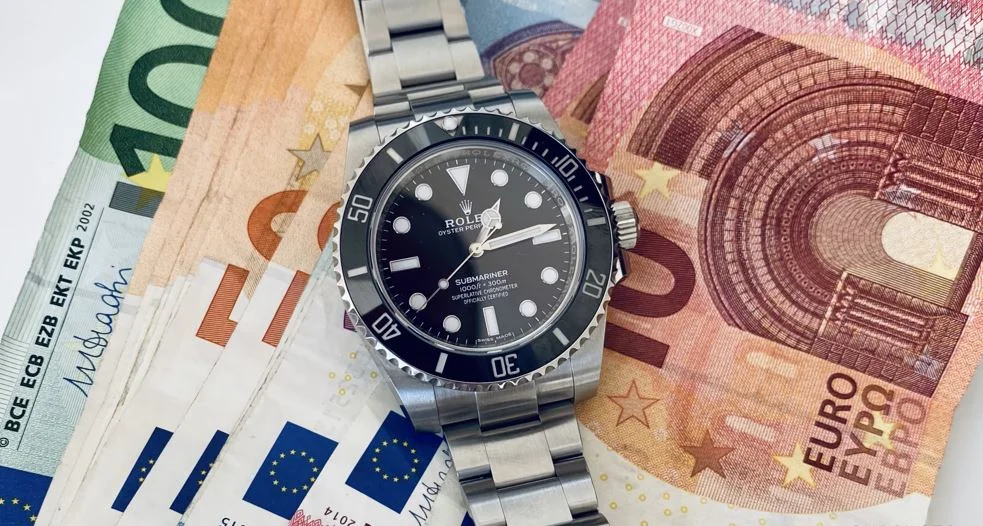
The question arrives with a specific tone — usually from someone who expected to spend twenty dollars and was quoted two hundred. Or someone who knew budget replicas were cheap and is now seeing prices for "super clones" that approach a thousand dollars. Why, they want to know, does a fake Rolex cost this much?
It's a fair question with a genuinely interesting answer. The answer has nothing to do with branding or markup. It has everything to do with materials science, manufacturing engineering, and the economics of small-batch precision production. By the end of this article, you'll understand exactly where the money goes — and why the cheaper alternative is almost certainly not worth it.
First: The Range Is Enormous
Before explaining why quality replicas cost what they do, it helps to understand the range. In the replica market, you can spend anywhere from $15 to $1,500 on a "Rolex." These are not different versions of the same product — they are fundamentally different objects that happen to share a visual reference.
The $15 watch has a plastic crystal, a quartz movement, a chrome-plated zinc alloy case, and a bracelet that will develop surface rust within months of contact with perspiration. It tells time adequately. It looks like a Rolex from five meters away. Up close, it is immediately obvious as a cheap fake.
The $800 super clone watch has a sapphire crystal, a clone mechanical movement, a 904L steel case machined to correct tolerances, a genuine ceramic bezel insert, and a solid-link bracelet with a functioning Oysterlock clasp. It tells time to within seconds per day. Up close, it looks essentially identical to a watch that retails for $10,000.
The question "why is a fake Rolex expensive" is really asking about the second category — why does it cost hundreds of dollars to produce something that isn't genuine?
The Steel Alone Is a Premium Material
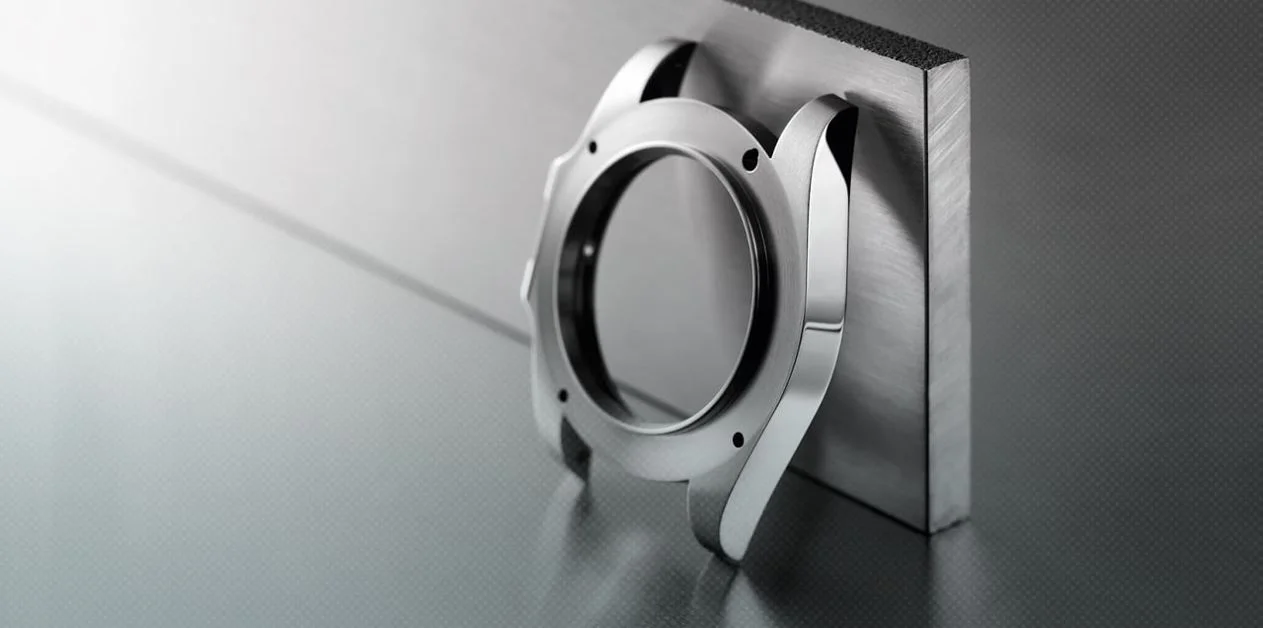
Rolex uses 904L stainless steel — a superalloy originally developed for the chemical processing industry. It contains higher concentrations of chromium, nickel, and molybdenum than standard 316L steel, giving it superior corrosion resistance and a distinctive, slightly warmer luster. It is also significantly more expensive to purchase as raw material and significantly harder to machine.
Most replica manufacturers use 316L steel because it is cheaper and easier to work with. Top-tier super clone manufacturers use 904L because their quality standard demands it. The material cost alone adds to the final price — but more significantly, the machining cost increases because 904L is harder on cutting tools, requires different speeds and feeds, and demands more frequent tool replacement.
A case machined from 904L steel is simply more expensive to produce than one machined from 316L, regardless of what watch brand it resembles.
The Ceramic Bezel: Not Paint, Not Coating
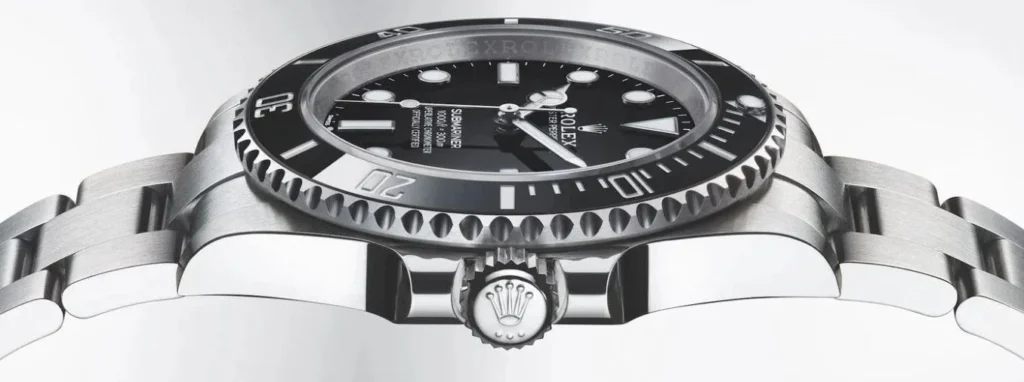
This is where most of the cost difference between budget and quality replicas lives. Rolex's Cerachrom ceramic bezel is produced through vacuum sintering — raw ceramic powder is formed, loaded with pigment, and fired in a vacuum at temperatures above 1,400 degrees Celsius. The result is a material harder than steel that cannot be scratched by keys, rings, or most everyday surfaces, and that maintains its color indefinitely.
Producing this properly requires ceramic sintering equipment — industrial kilns, controlled atmosphere processing, precision mold tooling — that costs hundreds of thousands of dollars. A manufacturer who has invested in this equipment can produce genuine ceramic bezels. One who hasn't produces aluminum inserts painted black or blue — functional for a few months before fading and scratching reveal the difference.
The capital investment required to produce genuine ceramic bezels is a primary reason why the super clone tier is dominated by a small number of manufacturers rather than dozens of competitors. The equipment cost creates a barrier to entry that separates serious producers from budget ones. When you pay a premium for a quality replica, a significant portion of that premium reflects the amortized cost of ceramic production equipment.
The Movement: Watch Engineering in Miniature
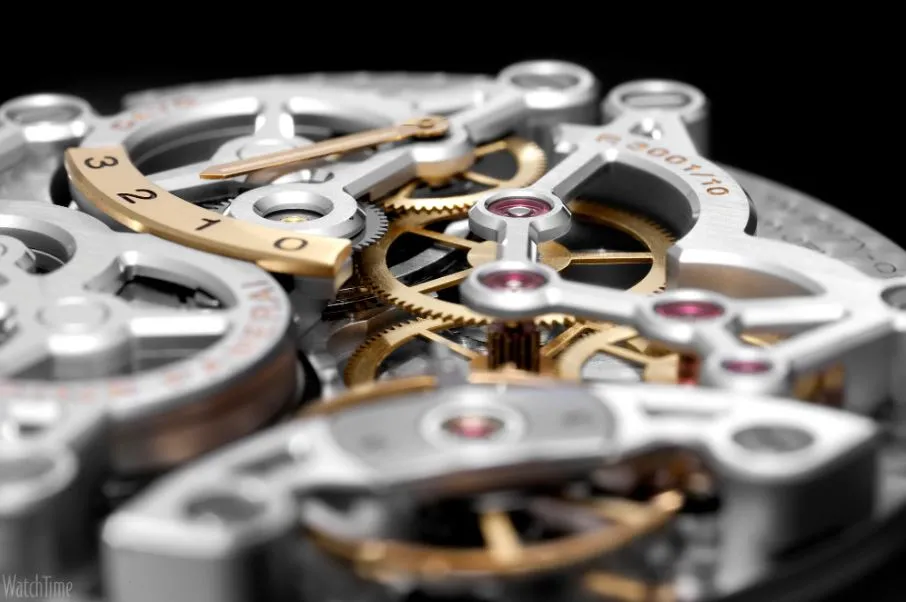
The mechanical movement is the most technically complex component of any watch — and the component where the cost difference between quality tiers is most dramatic. A generic Chinese quartz movement suitable for a budget replica costs pennies. A calibre-specific super clone movement that replicates the architecture and performance of the Rolex calibre 3235 costs orders of magnitude more.
Why so much more? Consider what the 3235 clone movement must accomplish:
- Maintain ±5 seconds per day accuracy (matching COSC chronometer standards)
- Provide 60-70 hours of power reserve from a bidirectional rotor
- Function correctly through all crown positions (winding, setting GMT hand, setting time)
- Resist magnetic fields to a meaningful degree through movement architecture
- Visually match the genuine calibre's component architecture when viewed through a caseback
Each of these requirements demands engineering effort. Calibre-specific clone movements are not produced by the dozen; they require substantial development investment, precision manufacturing to micron tolerances, and careful assembly and regulation. A super clone movement costs what it costs because producing it correctly is genuinely difficult.
The Crystal: Sapphire, Not Mineral
Rolex uses sapphire crystal — a single-crystal aluminum oxide that is the second-hardest material after diamond. Sapphire crystal is scratch-resistant (it cannot be scratched by keys, rings, or most common surfaces), optically clear, and chemically inert. Rolex applies multi-layer anti-reflective coating to both inner and outer surfaces to reduce reflections and enhance dial visibility.
Budget replicas use mineral crystal — essentially tempered glass. It is perfectly adequate for basic timekeeping but scratches readily and lacks the optical clarity and scratch resistance of sapphire. Quality super clones use synthetic sapphire with AR coating. Synthetic sapphire is grown rather than mined (it is chemically identical to natural sapphire but produced in industrial furnaces), but it is still more expensive than mineral glass and requires precision cutting and grinding to achieve the correct dome profile and dimensions.
The Bracelet: Solid vs. Hollow
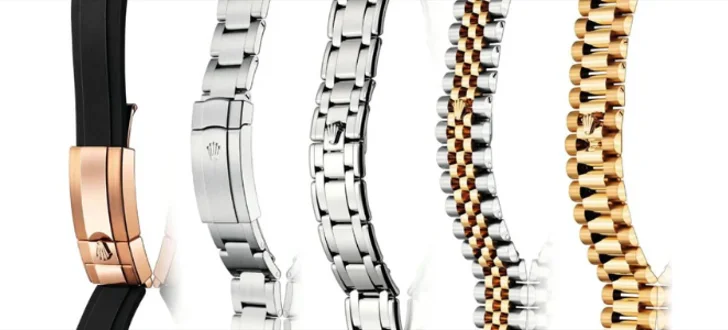
Genuine Rolex bracelets use solid links — each element machined from solid steel, not pressed from sheet stock. The result is a bracelet that has correct mass and drape, articulates with precision, and ages well without developing the hollow sound and flex that cheaper construction produces.
Producing solid-link bracelets costs significantly more than hollow construction. More steel per link, more machining time, more precise assembly. For a watch with 78 links in an Oyster bracelet, this difference compounds. Quality super clone manufacturers absorb this cost because the bracelet feel is immediately detectable by anyone familiar with genuine Rolex construction.
The Oysterlock clasp — with its flip-lock safety, Easylink 5mm extension, and specific click mechanism — also requires precision engineering. A correctly functioning clasp uses multiple precisely machined components and is another area where budget replicas economize.
Quality Control: The Hidden Cost
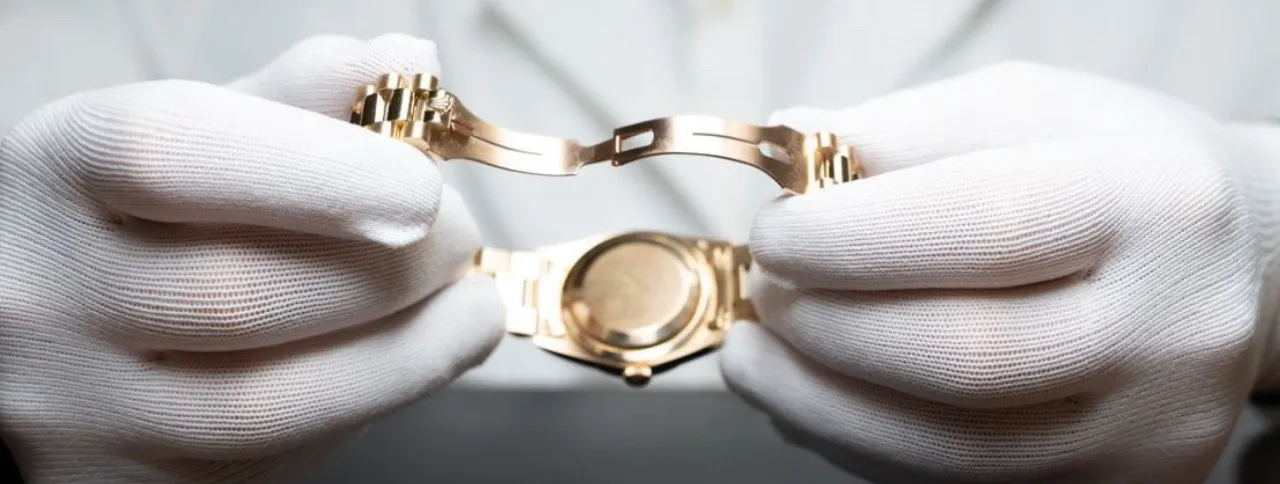
Perhaps the least visible cost in super clone production is quality control. Budget replica manufacturers perform minimal inspection — watches are assembled and shipped. A significant percentage arrive with defects ranging from minor (slightly misaligned dial printing) to major (non-functioning crown positions, incorrect bezel alignment).
Top-tier super clone manufacturers perform individual watch inspection against a published specification — checking crown function, timing accuracy, bezel click engagement, bracelet articulation, crown thread engagement, and water resistance. Watches that don't meet specification are rejected and reworked. This rejection rate represents real cost, which is reflected in the price of the watches that pass inspection.
The buyer's cost of a quality super clone includes, implicitly, the cost of all the inferior watches that were built and rejected to deliver one that meets standard. This is how quality manufacturing works — it's not just about the components in the watch you receive, but about the system that produced it.
The Legitimate Question: Is It Worth It?
Given all of this, the question becomes: is a quality super clone worth several hundred dollars? The answer depends entirely on what you value.
If you want the daily experience of wearing a watch that looks and feels like a genuine Rolex — correct weight, correct proportions, ceramic bezel that won't fade, sapphire crystal that won't scratch, mechanical movement that runs with the slight tick of precision engineering — then the quality tier is worth the price over the budget alternative. The difference between a $50 replica and a $600 super clone is dramatic and immediately apparent.
If you simply want a watch that looks vaguely like a Rolex for a costume or a joke, the $50 version serves that purpose adequately.
The super clone price is justified by what you actually get: a genuinely well-made watch that happens to share its design with the world's most desirable timepiece. That's not cheap — and it shouldn't be.
Browse our selection of quality super clone Rolex watches or read our buying guide for guidance on what to look for. Also see our analysis of why genuine Rolexes cost what they do for the full picture.