
Super Clone Rolex Explorer
About the Explorer
The Rolex Explorer was born on the summit of Mount Everest in 1953. Purpose-built for extreme conditions, it's the purest expression of Rolex's tool-watch philosophy. Our super clone captures that rugged reliability and clean, legible design.
Conquering the Summit
On May 29, 1953, Sir Edmund Hillary and Tenzing Norgay became the first confirmed climbers to reach the summit of Mount Everest. Rolex Oyster watches were part of the expedition, and the Explorer was launched that same year to commemorate the achievement. The 3-6-9 dial became an icon of adventure.
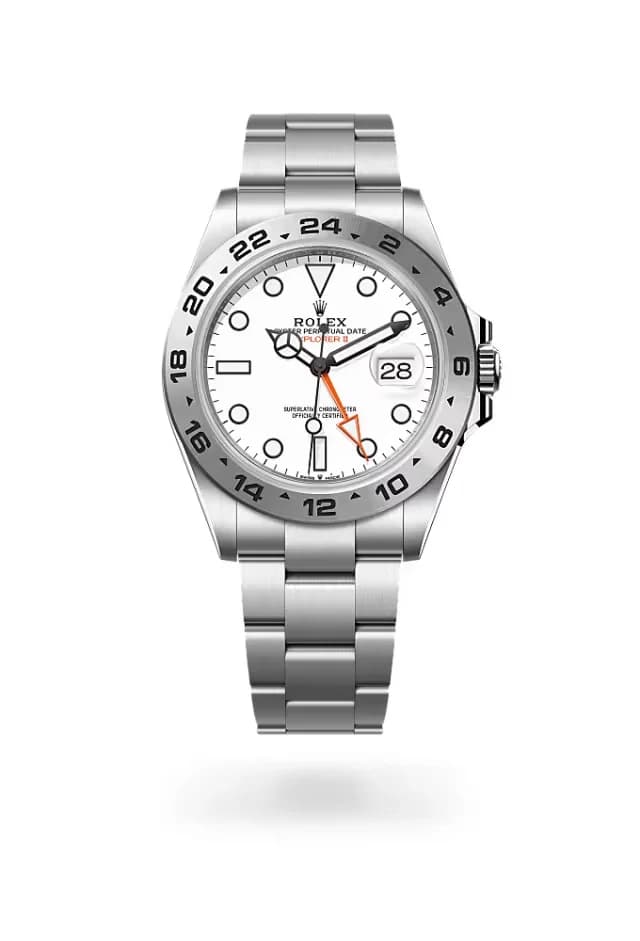
The Explorer II, introduced in 1971, added a fixed 24-hour bezel and an orange GMT hand for speleologists and polar explorers who work in environments where day and night are indistinguishable. Both models share the same DNA: legibility, durability, and understated confidence.
Our super clone Explorer replicates the Chromalight numerals, the smooth bezel, and the clean 36mm or 40mm case proportions. The Explorer II features the functional GMT hand and 24-hour bezel. Both deliver the same wrist presence and go-anywhere reliability.
What to Expect
Expedition Heritage
Designed for extreme conditions — the Explorer's clean dial and robust case handle anything nature throws at it.
Swiss-Grade Movement
Automatic movement with 70-hour power reserve and ±2 sec/day accuracy — set it and trust it.
904L Oystersteel
Full 904L construction with the Oyster case's proven 100m water resistance.
Chromalight Display
Blue luminescent numerals and hands that glow for up to 8 hours — essential for low-light conditions.
3-6-9 Dial
The iconic Explorer dial with oversized 3, 6, and 9 numerals — maximum legibility at a glance.
Oyster Bracelet
Three-piece link Oyster bracelet with Easylink comfort extension — 5mm of micro-adjustment.