
Replica Rolex Deepsea, D-Blue 116660, 136668LB
Deepsea Watches(4)

Rolex Deepsea Sea-Dweller 44mm 136668LB

Rolex Deepsea 44mm James Cameron 126660

Rolex Deepsea 126660

Rolex Deepsea 44mm Black Dial 116660
About the Deepsea
The Deepsea is the biggest, heaviest, deepest-rated dive watch Rolex has ever produced. Rated to 3,900 meters on the genuine — deeper than 99% of divers will ever go. We have the full family of 4 references on the shelf. Iconic James Cameron D-Blue 116660 made to commemorate the 2012 solo Mariana Trench dive, 2022 ceramic-and-titanium 136668LB redesign, standard black 116660, 40mm Sea-Dweller 126660 for smaller wrists, vintage 016819. The replica Rolex Deepsea ships with a Japanese Miyota automatic movement, from $359.
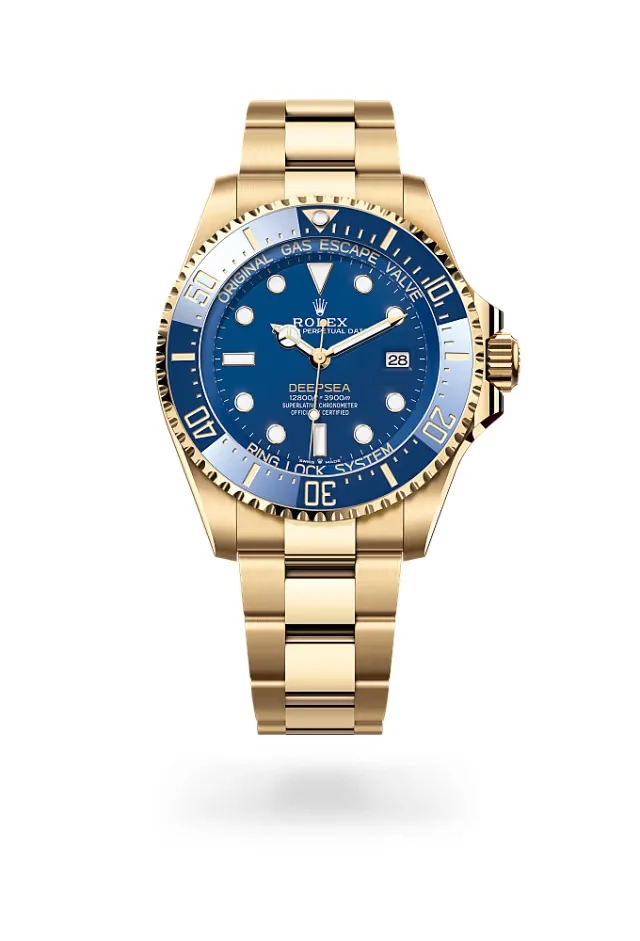
The Deepest Watch Rolex Has Ever Built
Story of the Deepsea starts in 1967 with a different watch called the Sea-Dweller. Rolex built it for a specific kind of professional diver — saturation divers who live for days or weeks at a time in pressurized chambers at the bottom of the North Sea, working on oil rigs or undersea pipelines. Not recreational divers. Industrial workers in the most extreme environment on earth. Needed a watch that could survive depths far beyond what the Submariner was rated for. Sea-Dweller solved that, and added one feature the Submariner doesn't have. A tiny one-way valve in the side of the case that lets helium gas escape during decompression. Saturation divers breathe a helium-oxygen mixture. Helium molecules are small enough to seep through the case seals during long pressurized stays. Without an escape valve, the helium would build up inside the watch and pop the crystal off when the diver returned to surface pressure. Sea-Dweller's helium escape valve solved that problem in 1967 and is still used today.
Deepsea was launched in 2008 as the bigger, more extreme version of the Sea-Dweller. Watch that pushed Rolex's depth rating to 3,900 meters — about 12,800 feet — deeper than the average depth of the Mariana Trench. Way Rolex did this is the engineering story most people miss. Instead of just making the case thicker, Rolex invented a system called Ringlock. Crystal is 5mm thick (versus the Submariner's 1.5mm). Around the inside of the case is a structural titanium pressure ring that distributes the inward pressure of seawater across the crystal and the caseback together, instead of letting all the force concentrate on the crystal alone. Case can withstand pressure that would crush a normal dive watch like a soda can, and does it without being absurdly thick. Deepsea is still 17.7mm thick (about 4.7mm thicker than a Submariner) and weighs around 220 grams on the bracelet, roughly 70 percent heavier than a Submariner. You feel the Deepsea on your wrist the moment you put it on. That weight is part of the watch.
The most famous Deepsea is the D-Blue 116660. March 2012, filmmaker James Cameron — director of Titanic and Avatar — made a solo descent in a custom submersible called the Deepsea Challenger to the Challenger Deep, the deepest known point in the Pacific Ocean at 10,908 meters. First person in 52 years to reach the bottom of the Mariana Trench. Strapped to the outside of his submersible's robotic arm was a Rolex experimental prototype called the Deepsea Challenge, rated to 12,000 meters. The watch survived the dive. To commemorate it Rolex released a special version of the production Deepsea (still reference 116660) with a unique dial that fades from a bright surface blue at the top to total ocean black at the bottom. Gradient represents the literal journey from sunlit shallow water down into the absolute darkness of the deep sea. Collectors immediately nicknamed it the D-Blue or the James Cameron. Most photographed Deepsea variant ever made and the cornerstone of the Deepsea family today.
What we copy and what we don't. 44mm case dimensions, 17.7mm thickness, lug-to-lug span, wrist-crushing weight, Cerachrom-style ceramic bezel, helium escape valve at 9 o'clock (it's there and looks correct, though our valve is decorative — your watch is not going saturation diving), D-Blue gradient with the correct fade from bright blue to total black, Ringlock case profile, Oyster bracelet with the Glidelock and Fliplock extension links. All of that we get right. The 2022 136668LB redesign uses an actual titanium caseback for the lighter wrist feel that distinguishes the new version from the older 116660 — not a fake-titanium plating, real titanium. Where we cannot match the genuine: the 3,900-meter pressure rating. Replicas are pressure-tested to roughly 30 meters at most, regardless of what the dial claims. Ringlock system is built around precisely-tolerance components, certified pressure testing, and specific gasket materials that aren't economical at $359 replica price. If you are actually planning to dive past 100 meters, buy a genuine Deepsea or use a dive computer. For everyone else — essentially everyone — the look, feel, weight, and wrist presence are 100 percent there.
What to Expect
Replica Deepsea from $359
Japanese Miyota automatic, 40-hour power reserve, smooth sweeping seconds. Full 44mm Ringlock case presence with real Oystersteel at Replica price.
Real Ringlock Case Profile
44mm case, 17.7mm thick, with the structural titanium pressure ring profile of the genuine Deepsea. Same case shape, same crystal thickness silhouette, same wrist presence as the real 116660 and 136668LB.
James Cameron D-Blue Dial
Iconic 116660 D-Blue dial commemorating James Cameron's 2012 solo descent to the Challenger Deep. Gradient fades from bright surface blue at the top to total ocean black at the bottom. Most photographed Deepsea variant ever made.
2022 Ceramic Redesign Available
136668LB is Rolex's 2022 redesign. First major Deepsea update since 2014. Real titanium caseback for lighter wrist weight, refined case profile, ceramic bezel.
Helium Escape Valve at 9 O'Clock
Signature one-way helium release valve from the Sea-Dweller heritage. Visually present and correctly placed at 9 o'clock on every reference, though decorative on the replica. Your watch is not going saturation diving.
Heaviest Sport Rolex on the Wrist
44mm Deepsea weighs around 220 grams on the bracelet — roughly 70 percent heavier than a Submariner. You feel it the moment you put it on. That weight is part of the watch.
Deepsea Replica — Frequently Asked Questions
What is the difference between the Sea-Dweller and the Deepsea?
Both are Rolex professional dive watches, distinct references with distinct purposes. Sea-Dweller (current reference 126600, our catalog 126660, 40mm) is the more wearable dive watch. Rated to 1,220 meters, with the helium escape valve, suitable for daily wear and for actual saturation diving. Deepsea (current references 116660 and 136668LB, 44mm) is the larger and more extreme variant. Rated to 3,900 meters using the patented Ringlock case architecture with the 5mm-thick sapphire crystal and the structural titanium pressure ring. Sea-Dweller is for divers who actually dive every day. Deepsea is for the deepest-rated production dive watch in the world plus the wrist presence and weight to match. Same Sea-Dweller family DNA. Deepsea is bigger, thicker, heavier, rated three times deeper.
What is the James Cameron D-Blue Deepsea?
D-Blue is the collector nickname for the Deepsea reference 116660 with the gradient blue-to-black dial. Released by Rolex in 2012 to commemorate filmmaker James Cameron's solo descent to the Challenger Deep at 10,908 meters — the deepest known point in the Pacific Ocean. Cameron was the first person in 52 years to reach the bottom of the Mariana Trench, and Rolex strapped an experimental prototype Deepsea Challenge (rated to 12,000 meters) to the outside of his submersible's robotic arm during the dive. The watch survived. To honor it, Rolex released the production 116660 with a dial that fades from bright surface blue at the top to total ocean black at the bottom. Literal visual journey from daylight down into total deep-sea darkness. Most photographed Deepsea variant ever made.
What is the 2022 Deepsea 136668LB redesign?
136668LB is Rolex's first major update to the Deepsea since 2014. Released in 2022, collectors call it the Deepsea Mark II. Keeps the same 3,900-meter Ringlock case architecture as the older 116660 but adds three significant changes. First, the case profile is slightly refined and reads as less bulky on the wrist despite the same depth rating. Second, and most importantly, the caseback is now solid titanium instead of steel. That single material change drops the overall wrist weight by about 15 to 20 percent, making the watch much more wearable for daily use. Third, the dial layout is cleaner with refined indices and a slightly updated bezel insert. Modern flagship Deepsea and the version Rolex currently produces alongside the older 116660. We carry it with real titanium caseback (not a plated fake).
Is the Deepsea replica really waterproof to 3,900 meters?
No. Replica watches are typically pressure-tested to roughly 30 meters of water resistance at most, regardless of what the dial claims about 3,900 meters. Ringlock case architecture in the genuine Deepsea relies on precisely-tolerance components, certified pressure testing, specific gasket materials, and quality control standards that aren't economical at $359 replica price points. Our replica handles hand washing, rain, a pool splash. Call it 30 meters of real-world water resistance. Not a dive watch. If you are actually planning to dive past 100 meters, buy a genuine Deepsea or use a dedicated dive computer. Your life depends on it. For everyone else the look and wrist presence of the Deepsea are completely there.
Which Deepsea should I actually buy?
Buy the James Cameron D-Blue 116660. Blue-to-black gradient dial is the most beautiful modern Rolex dial in the catalog and the watch tells a story nobody else's wrist can tell — the actual story of the deepest manned ocean descent in human history. Iconic Deepsea, the one every collector says to own first. 2022 136668LB ceramic redesign is the second pick if you want a noticeably lighter watch on the wrist (titanium caseback drops about 35 grams off the daily weight, which makes a real difference) and you prefer the cleaner modern dial layout. Standard black-dial 116660 is the third pick. Great watch, but the D-Blue is the same watch with the more interesting dial. Skip the 40mm Sea-Dweller 126660 unless your wrist is small (under 7 inches) and the 44mm Deepsea actually feels too big. Start with the D-Blue.
Why is the Deepsea so much bigger and heavier than the Submariner?
Pressure rating math. Submariner is rated to 300 meters of water with a 13mm-thick case and a 1.5mm sapphire crystal. Deepsea is rated to 3,900 meters — 13 times deeper — and the physics of holding back that much water pressure require a much thicker case, a much thicker crystal, and structural reinforcement. Deepsea uses a 5mm-thick sapphire crystal (more than three times the Submariner's), a 17.7mm-thick case (4.7mm thicker than the Submariner), and the patented Ringlock system. Structural titanium pressure ring around the inside of the case that distributes the inward pressure of seawater across the crystal and the caseback together. Result is a watch that weighs about 220 grams on the bracelet versus around 150 grams for a Submariner — roughly 70 percent heavier. Deepsea is not bigger because Rolex thought it looked cool. Every extra millimeter and every extra gram is structural pressure containment.