
Replica Rolex Explorer, 36mm I and 42mm II Polar
Explorer Watches(11)

Rolex Explorer 40mm Black Dial 224270

Rolex Explorer 39mm Black Dial 42002

Rolex Explorer 26mm Black Dial 98089

Rolex Explorer 26mm White Dial 98088

Rolex Explorer 40mm Black Dial 98239

Rolex Explorer 40mm Black Dial 98240

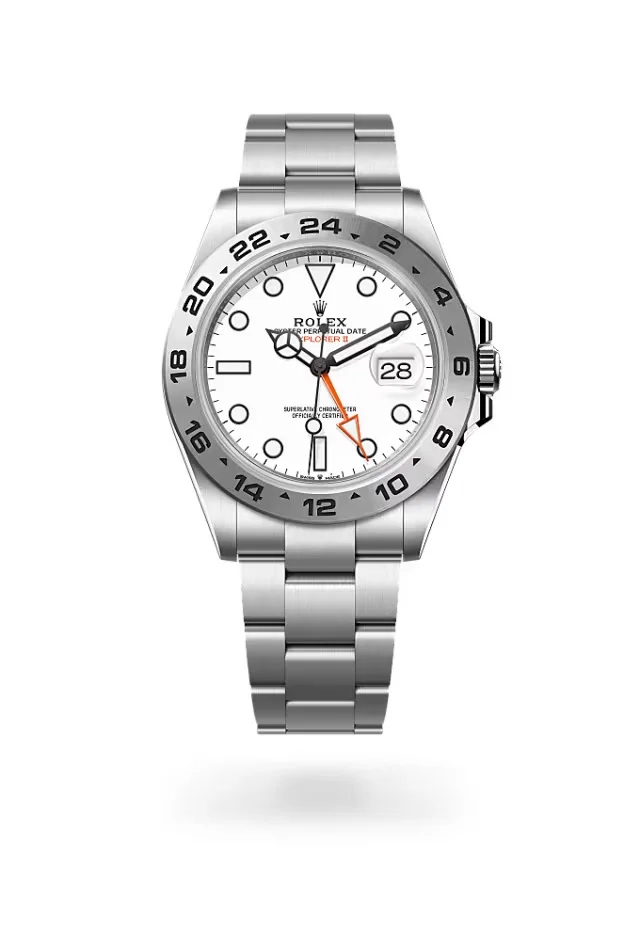
Rolex Explorer II 42mm White Dial 226570 "Polar"

Rolex Explorer 36mm Black Dial Srl156 14270

Rolex Explorer II 42mm Black Dial 216570BKSO

Rolex Explorer 124270 36mm Black Dial

Rolex Explorer 226570 42mm Black Dial
About the Explorer
The Explorer is the cleanest, simplest, and most quietly perfect Rolex sport watch in the entire catalog. No rotating bezel, no Cyclops magnifier, no chronograph, no nothing. Black dial, three big luminous numerals at 3, 6, and 9, Mercedes hour hand. We have 11 of them on the shelf. Modern 36mm Explorer 124270 (the 2021 refresh that brought the historically correct size back), older 14270 and 16570 vintage references, and the 42mm Explorer II 216570 and 226570 with the orange GMT hand and the famous white-dial Polar version. The replica Rolex Explorer ships with a Japanese Miyota automatic movement, from $359.
The Watch That Has Nothing to Prove
May 29, 1953. Sir Edmund Hillary and Sherpa Tenzing Norgay became the first two human beings confirmed to reach the summit of Mount Everest. Part of a British expedition officially equipped with Rolex Oyster watches. Rolex had been quietly partnering with Himalayan expeditions for almost twenty years by that point, supplying watches in exchange for real-world testing data from the most extreme cold, altitude, and pressure conditions on earth. When Hillary and Tenzing came down from the summit, Rolex did what any smart company would do — launched a watch to commemorate the climb later that same year and called it the Explorer. Name was meant to capture what the watch was for. Going places normal watches could not survive, and reading the time at a glance under conditions where you might not be able to look at your wrist for more than a second.
The dial is what defines the Explorer and what nobody else in watchmaking has ever quite copied right. Three oversized luminous Arabic numerals at 3, 6, and 9, big enough to read across a tent in low light. 12 position marked with an inverted triangle, other hours with simple stick markers. Hour hand is the famous Rolex Mercedes hand, with a circular cutout filled with luminous material so it stays visible in total darkness. Whole layout is the purest expression of one idea. Maximum legibility, zero distraction, no information you don't actually need. No date window, no Cyclops magnifier, no rotating bezel, no second time zone, no chronograph, no power reserve indicator, nothing extra. Just the time, big and clean, in a robust Oyster case. This is the Rolex you wear when you have nothing to prove.
The Explorer II is a different watch that shares the family name. Launched in 1971. 42mm version with two extras the classic Explorer doesn't have. Fixed 24-hour bezel around the edge of the dial, and a fourth hand with a bright orange tip that rotates once every 24 hours. Reason both exist is specific. Explorer II was originally designed for speleologists — cave explorers — and polar researchers, two groups who spend long stretches of time in environments where there is no natural daylight at all. Inside a deep cave, or during the six-month polar winter, you can't tell whether it's 3 in the morning or 3 in the afternoon by looking out a window. Orange 24-hour hand on the Explorer II points at the fixed bezel and tells you, at a glance, whether you are in the AM or PM half of the day. One of the most specifically useful watch complications ever made, and almost nobody who buys an Explorer II actually needs it. 42mm references are the 216570 (current generation) and the 226570 (the most recent update). Both come in the standard black-dial version and the famous white-dial Polar. White Explorer II is the only major Rolex sport watch with a white dial and one of the most photographed watches in the modern catalog.
What we copy and what we don't. Case shape, 36mm and 40mm and 42mm sizes, lug width, Oyster bracelet, dial layout with the oversized 3-6-9 numerals exactly proportioned correctly, Mercedes hour hand, Chromalight luminous fill that glows blue in the dark for several hours, orange 24-hour hand on the Explorer II, fixed bezel with the engraved 24-hour scale, weight on your wrist. All of that we get right. On the Explorer II, the orange GMT hand is set together with the main hours on the Replica Miyota — the real 3285 lets you set the GMT hand independently, ours doesn't. Visual GMT function works as a day/night reference. Where we cut corners is the movement underneath. Real Explorer runs a Caliber 3230 (time only) or 3285 (Explorer II GMT), both with COSC chronometer certification and 70-hour power reserves. Our Replica runs a Japanese Miyota automatic with about 40 hours of reserve. Smooth sweep, accurate within a few seconds a day. On the wrist nobody can tell. On a timing machine, that's where the gap shows up.
What to Expect
Replica Explorer from $359
Japanese Miyota automatic, 40-hour power reserve, smooth sweeping seconds. The cleanest possible Rolex sport watch at Replica price.
3-6-9 Luminous Dial
Signature Explorer dial with oversized luminous Arabic numerals at 3, 6, 9 positions plus the inverted triangle at 12. Maximum legibility, zero distraction. Cleanest dial in the entire Rolex catalog.
Orange 24-Hour Hand (Explorer II)
Explorer II adds the iconic orange 24-hour hand that rotates against a fixed bezel. Originally built for cave explorers and polar researchers who couldn't tell day from night. Now bought by people who just like the way it looks.
Polar White Dial Available
Explorer II 216570 Polar is the only major Rolex sport watch with a stark white dial. Black markers, orange GMT hand, instantly recognizable from across a room.
36mm, 40mm, 42mm Sizes
Historically correct 36mm classic Explorer (the size Hillary's expedition wore), modern 40mm, 42mm Explorer II. Pick by wrist size and which feature set you want.
Modern and Vintage Both Stocked
2021 refresh 124270 alongside the older 14270 and 16570 vintage references, plus both Explorer II generations. Whatever era of Explorer you actually want, it's on the shelf.
Explorer Replica — Frequently Asked Questions
Explorer or Explorer II — what actually separates them?
Two different watches that share a name. Classic Explorer (currently the 36mm 124270, plus the older 14270, 16570, and other vintage references) is a pure time-only sport watch. No date, no rotating bezel, no Cyclops, no GMT. Just the famous 3-6-9 luminous dial in a clean Oyster case. Explorer II (currently 42mm 216570 and 226570) adds two things the classic doesn't have. Fixed 24-hour bezel around the edge of the dial, and an extra orange hand that rotates once every 24 hours. Orange hand was originally designed for cave explorers and polar researchers who needed to tell day from night in environments with no natural light. Explorer II is also bigger (42mm vs 36 or 40mm) and feels more substantial on the wrist. Pick the classic for the cleanest possible dress-sport watch. Pick the Explorer II for the GMT function and the more imposing case.
Did Hillary and Tenzing really wear an Explorer on Everest?
Not exactly. The 1953 British Mount Everest expedition was officially equipped with Rolex Oyster Perpetual watches — standard Rolex sport watch of the era, not a watch branded as Explorer. Explorer name and the 3-6-9 dial design came later in 1953, after Hillary and Tenzing reached the summit, as Rolex's commemoration of the climb. Watches that actually went to the top of Everest were Rolex Oysters. They became the inspiration for the Explorer line and the connection to the climb is real, but the specific Explorer branding was added after the fact.
What is the Polar Explorer II?
Collector nickname for any Explorer II reference with the white dial — currently the 216570 and the newer 226570. Name comes from the watch's connection to polar exploration. Original 1971 Explorer II was designed for researchers working in environments where natural daylight was either constant (polar summer) or absent (polar winter and deep caves), and the white-dial version became visually associated with polar conditions specifically. Polar is the only major Rolex sport watch with a stark white dial. Every other Rolex sport reference is black, blue, green, or grey. Makes it instantly recognizable from across a room. Orange GMT hand against the white dial is one of the most photographed Rolex looks of the past decade. We stock the replica Rolex Polar Explorer II 216570 as Replica with Japanese Miyota from $359.
Which Explorer should I actually buy?
Buy the modern 36mm Explorer 124270. The cleanest, most timeless tool watch in the entire Rolex catalog and probably the single most underrated reference Rolex makes. 36mm size is the historically correct one — what the Everest expedition wore in 1953, what every Explorer was until Rolex briefly went to 39mm and then came back to 36mm with the 2021 refresh. Fits any wrist comfortably, slides under any shirt cuff, zero features that will ever get in your way. No date, no rotating bezel, no Cyclops, no chronograph, no second time zone. Just the time, perfectly readable, in a robust Oyster case. 40mm is the second pick if you have a larger wrist and prefer modern proportions. Polar Explorer II is the third pick if you specifically want the orange GMT hand and the conversation-piece white dial.
Is the Explorer good for everyday wear?
Yes, and arguably better than any other Rolex sport watch for that exact purpose. Explorer was specifically designed to do nothing except tell time clearly. That means it has none of the things that make sport watches annoying for daily use. No rotating bezel to catch on shirt cuffs. No Cyclops magnifier breaking the dial line. No chronograph pushers sticking out of the case. No GMT hand cluttering the dial. 36mm case slides under any shirt sleeve without resistance. Black dial works with any outfit from jeans to a suit. Oyster bracelet is robust enough that you can ignore it for years and it still looks fine. Of all the Rolex sport collections, the Explorer is the one most likely to become the watch you actually wear every day instead of saving it for special occasions. That's what it was built for in 1953 and it's still what it does best in 2026.
How is the Explorer II different from the GMT-Master II?
Both have a fourth hand that tracks a second time zone but they work differently and were built for different people. GMT-Master II has a rotating 24-hour bezel and an independently jumping local hour hand — designed for travelers who frequently change time zones and need to adjust local time without losing their home-time reference. Explorer II has a fixed 24-hour bezel and the fourth hand tracks GMT or home time directly — designed originally for cave explorers and polar researchers who needed to know if it was day or night when natural light was unavailable, not for travelers crossing time zones. Explorer II is slightly larger (42mm vs GMT-Master's 40mm), uses a tool-watch black or white dial instead of the GMT-Master's two-tone Cerachrom bezels, and has a more rugged scientific-instrument identity. GMT-Master II is the more popular travel watch. Explorer II is the more specialized tool. We carry both.